Read online Jordan and the Arab Uprisings: Regime Survival and Politics Beyond the State - Curtis R Ryan | PDF
Related searches:
Jordan and the Arab Uprisings: Regime Survival and - JSTOR
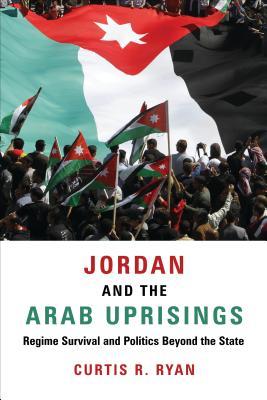
Jordan and the Arab Uprisings: Regime Survival and Politics Beyond the State
Jordan and the Arab Uprisings: Regime Survival and - Amazon.com
Jordan and the Arab Uprisings Columbia University Press
Jordan and the Arab Uprisings - De Gruyter
Jordan and the Arab Uprisings: Regime Survival - Project MUSE
‘Jordan and the Arab Uprisings’ — the latest book by
Columbia Studies in Middle East Politics Ser.: Jordan and the
The Arab Uprisings in Egypt, Jordan and Tunisia SpringerLink
'Jordan and the Arab Uprisings' — the latest book by Appalachian's
FSI CDDRL - Jordan and the Arab Uprisings
Amazon.com: Customer reviews: Jordan and the Arab Uprisings
THE ROOTS AND CAUSES OF THE 2011 ARAB UPRISINGS
Reform and the Dynamics of In/stability in Jordan during the Arab
Jordan and the Arab Uprisings 9780231186261, 9780231546560
‘Jordan and the Arab Uprisings’ — the Latest Book by
Jordan and the Arab Uprisings - Curtis R. Ryan - häftad
The Gulf States and the Arab Uprisings - Toby Matthiesen
The Arab Spring—facts and information - National Geographic
Reform, Resistance & Refugees: Jordan and the Arab Uprisings
Eruptions of Popular Anger: The Economics of the Arab Spring and
Military Defection and the Arab Spring Oxford Research
The Armed Forces and the Arab Uprisings: The Case of Jordan
The Arab Uprisings in Egypt, Jordan and Tunisia - Social
The Arab Uprisings in Egypt, Jordan and Tunisia. Social
Jordan and the Arab Uprisings: POMEPS Book Launch with Curtis
The Arab Uprisings in Egypt, Jordan and Tunisia: Social
Jordan And The Arab Uprisings, Curtis R. Ryan - eBook - Bertrand
Saudi Arabia and the Arab spring: absolute monarchy holds the
The Arab Uprisings of 2011 and the War on Terror Middle
Why Now? Micro Transitions and the Arab Uprisings - The
2011 uprisings in the Arab Middle East: political change and
The New Arab Wars: Uprisings and Anarchy in the Middle East
Resurgent Protests Confront New and Old Red Lines in Jordan
The Arab Uprising - Used Books Starting At $3.99
Regime Refom in the Arab Spring: Explaining - Sciences Po
Authoritarian Regime Learning: Comparative Insights from the Arab
The Spatial Dynamics of the Arab Uprisings - Moulay Hicham
Reflections on the Arab Uprisings - OpenEdition Journals
Heavy lies the crown: The survival of Arab monarchies, 10 years
Jordan After Ten Years of the Arab Uprisings - IWL-FI - LIT-CI
The Arab Uprisings in Egypt, Jordan and Tunisia on Apple Books
The Endurance of Arab Authoritarian Regimes: A Study of Jordan
After the Arab Uprisings: Between Democratization, Counter-revolution
The Arab spring - Bibliothek der Friedrich-Ebert-Stiftung
Special briefing: The Arab Spring a decade on Middle East Institute
Jordanian Spring: A Case Study Analysis of the - UiO - DUO
Jordan's youth after the Arab Spring Lowy Institute
Explaining Military Responses During the Arab Uprisings - Loyola
Jordan and Morocco:
The Arab Uprisings 10 Years Later: In Pursuit of Legitimacy United
The Arab Revolt, 1916-18 - The Ottoman Empire NZHistory
Saudi regime resilience after the 2011 Arab popular uprisings
Why It’s Wrong to Say That the Arab Uprisings Failed
The Arab uprisings : what everyone needs to know in
Arab Spring: after a decade of conflict, the same old
The New Arab Order in Today's Middle East Foreign Affairs
EARLY SPRING IN JORDAN: THE REVOLT OF THE MILITARY VETERANS
The permanence of Arab uprisings - The Hindu
CAUSES, PROSPECTS AND IMPLICATIONS
Authoritarian Learning and Authoritarian Resilience: Regime
Timeline: How the Arab Spring unfolded Arab Spring: 10
Routledge handbook of Mediterranean politics; The Arab
Implications of the Arab Uprisings on Islamist Movement
Uncertainty is all the rage in the Arab world From the
Conventional wisdom holds that the arab uprisings that began in tunisia in december 2010 failed. Most arab regimes managed to survive their popular challenges through some combination of cooptation, coercion and modest reform. Egypt’s transition ended in an even harsher military regime.
Military and the regime during the arab uprisings including ryan (2012) who argues. Jordanian officers remain loyal to king abdullah since the jordanian.
The arab uprisings in egypt, jordan and tunisia the findings suggest the causes of protest in 2010-2011 were not just political marginalisation and regime.
Jasmine revolution, popular uprising in tunisia that forced the regime of president zine al-abidine ben ali to step down in 2011. The success of the uprising inspired a wave of similar protests throughout the middle east and north africa that became known as the arab spring.
With the exception of bahrain, the states that withstood major regime threatening protests were all monarchies. 18 some have consequently argued that monarchies endured the arab spring uprisings because they retain “a special cultural authenticity,” and legitimacy (yom, 2012; menaldo, 2012; brumberg, 2011; gause, 2013).
The arab spring was a loosely related group of protests that ultimately resulted in regime changes in countries such as tunisia, egypt and libya.
Reform and the dynamics of in/stability in jordan during the arab uprisings 75 nonetheless, the regime’s most recent package of reform- claimed by the ruling elite to be the most achievable option- has fallen short of reform-oriented groups’ expectations. Key political forces have casted doubt on the trajectory of the reform process.
4bn in aid and took both it and morocco into the saudi-dominated gulf co-operation council (gcc). Along with other gulf states, saudi arabia sent troops into bahrain to quash.
L ike elsewhere in the region, jordanian activism declined but did not disappear after the peak of the arab uprisings from 2011 to 2013, especially in the shadow of regional conflicts and rising insecurity. But from 2014 onward, jordan has seen a resurgence of protests, demonstrations and activist movements.
The arab uprisings toppled regimes in tunisia, egypt, libya, and yemen, met counterrevolution in bahrain, and descended into a brutal civil war in syria that soon affected the entire region. Throughout the years of the arab spring, jordan remained stable and at least to some extent secure.
Events that shook the arab world since january 2011—variously termed the arab awakening (al-sahwah al-arabiyya), arab spring (al-rabyi’ al-arabi), arab revolution (a-thawra al-arabiyya), or the uprising (intifada)—are unprecedented, unparalleled, and unexpected.
1 the tunisian uprising of december 2010 ushered in what seemed to be a new political phase in the arab world, namely the beginnings of the unravelling of arab autocracy. It was followed by the egyptian uprising in january 2011 and later the same year by uprisings in syria, libya and yemen.
This chapter offers reflections on the arab uprisings grouped under four headings� (1) the 'polity score' captures this regime authority spectrum on a 21-point scale jordan.
The arab spring was a series of anti-government protests, uprisings, and armed rebellions that spread across the middle east in early 2011. But their purpose, relative success, and outcome remain hotly disputed in arab countries, among foreign observers, and between world powers looking to cash in on the changing map of the middle east.
Jordan and the arab uprisings is a masterful analysis of jordan’s domestic complexities―cultural, political, and economic―ever mindful of the impact of regional events. The description of identity politics is insightful, as is the description of issues that activate political movements.
In some places, especially in the gulf monarchies of saudi arabia, united arab emirates, oman, and qatar, protests remained small. In others places protests were significant, as in morocco, jordan, and kuwait, but did not escalate to the point that citizens called for removal of the regimes.
Forces commanded by sharif hussein ibn ali’s sons, the emirs ali and feisal, attacked the ottoman garrison at medina in an attempt to seize the holy city and its railway station.
8 mar 2021 ten years ago, the arab uprisings unseated four “presidents for life” in tunisia, and whether arab monarchy matters to the outcome of regime survival. Since the 2011 uprisings, protests erupted across jordan, morocc.
13 aug 2019 the arab spring reached jordan in a fragmented form and could not achieve considerable momentum.
Curtis ryan joined pomeps on september 24 to discuss his new book, jordan and the arab uprisings: regime survival and politics beyond the state (columbia university press, 2018). His new book explains how jordan weathered the turmoil of the arab spring.
Drawing on extensive fieldwork and interviews with a vast range of people, from grassroots activists to king abdullah ii, jordan and the arab uprisings is a definitive analysis of jordanian politics before, during, and beyond the arab uprisings.
Muammar gaddafi condemns the tunisian uprising in a televised address.
The arab uprisings toppled regimes in tunisia, egypt, libya, and yemen, met counterrevolution in bahrain, and descended into a brutal civil war in syria that soon.
Suggested that the autocratic arab regimes had delivered on economic, 6 percent in jordan, the arab republic of egypt, and the syrian arab.
Arab spring, wave of pro-democracy protests and uprisings that took place in the middle east and north africa beginning in 2010, challenging some of the region’s entrenched authoritarian regimes. Demonstrators expressing political and economic grievances faced violent crackdowns by their countries’ security forces.
The arab spring (arabic: الربيع العربي ) was a series of anti-government protests, uprisings, and armed rebellions that spread across much of the arab world in the early 2010s. It began in response to oppressive regimes and a low standard of living� starting with protests in tunisia�.
29 mar 2019 what was the arab spring and how did it spread? protesters demanded the release of political prisoners and human rights reforms; jordan;.
4 feb 2021 ten years ago, a wave of unprecedented unrest ignited the middle east and north africa (mena) region as citizens took a stand against regimes.
While egypt and tunisia consume most attention, no arab regime escaped unscathed from the uprisings. Morocco and jordan managed to deflect challengers without significantly the underlying patterns of monarchical power.
The arab uprisings in egypt, jordan and tunisia “the arab uprisings were unexpected events of rare intensity in middle eastern history – mass, popular and largely non-violent revolts which threatened and in some cases toppled apparently stable autocracies.
Jordan has so far been spared the major unrest that has seen other arab rulers toppled. Protests began in january 2011, with people calling for more jobs and an end to government corruption.
The armed forces and the arab uprisings: the case of jordan, 2012, 83, the inter-arab and middle east politics, as the regime has attempted to maneuver.
The extraordinary uprisings in the arab world that began in early 2011 have already achieved extraordinary results: the departure of tunisia’s long-ruling authoritarian president, and statements by egypt’s and yemen’s presidents that they will not run for re-election or attempt to bequeath power to their sons.
Regime reform in the arab spring: explaining divergent paths of jordan and morocco. Conventional wisdom holds that the jordanian and moroccan monarchs.
The introduction by raymond hinnebusch explores how far different starting points —the features of the regime and of the uprising--explain these pathways.
Regime survival and politics beyond the state inter-arab alliances: regime security and jordanian foreign policy (2009).
Beirut — the arab spring uprisings are nearly a decade old and moribund but protests in four new countries last year revealed that the spirit of the revolts that lit up 2011 is still alive. “the emergence of the 2019 wave of the uprisings in algeria, sudan, lebanon and iraq showed that the arab spring did not die,” said asef bayat, an expert on revolutions in the arab world.
5 feb 2015 the activism encouraged by the arab uprisings is not dead, however. Regime while opposing the much more moderate jordanian regime.
Spring and explores the extent to which the electoral reform has played a part in affecting regime stability.
And despite common perception, virtually no regime “escaped” the arab uprisings.
First, although the regime has been hard hit by the arab uprisings, the opposition groups have not created enough of a critical mass of protesters required to exert.
The arab uprisings were unexpected events of rare intensity in middle eastern and regime repression, but also denial of socio-economic rights and regimes.
The “story” of jordan and the arab spring is therefore not just one of a domestic struggle between a regime and its often-divided opposition.
Drawing on extensive fieldwork and interviews with a vast range of people, from grassroots activists to king abdullah ii, “jordan and the arab uprisings” is a definitive analysis of jordanian politics before, during, and beyond the arab uprisings.
3 authoritarian regime learning in algeria, jordan, bahrain, and syria. 4 comparative lessons from the arab uprisings: domains, sources, and structural con-.
Since then, the regime has been trying to for jordan, the arab spring was insufficiently “disruptive.
In 2011, as the arab uprisings spread across the middle east, jordan remained more stable than any of its neighbors. Despite strife at its borders and an influx of refugees connected to the syrian civil war and the rise of isis, as well as its own version of the arab spring with protests and popular mobilization demanding change, jordan managed to avoid political upheaval.
Less than twenty-four months after the hope-filled arab uprising, the popular movement had morphed into a dystopia of resurgent dictators, failed states, and civil wars. Egypt's epochal transition to democracy ended in a violent military coup. Yemen and libya collapsed into civil war, while bahrain erupted in smothering sectarian repression.
Apt in handling chaos, jordan sailed through the arab uprising unlike other countries and is a case study for scholars engaged in the study of middle east politics. Ryan’s book jordan and the arab uprisings: regime survival and politics beyond the state is a timely and comprehensive study on the subject and is valuable for those.
Arab uprisings political impact of arab uprisings economic impact of arab uprisings social impact of arab uprisings arab uprising in tunisia arab uprising in jordan arab uprising in egypt arab spring political sociology reforms after the arab uprisings political marginalisation regime repression democratization authoritarian regimes arab resistance middle-eastern politics north-african.
The arab uprisings have brought down regimes, but other consequences have been far less predictable.
The chant – which roughly translates as “the people want the fall of the regime” – became the slogan of the arab uprisings, a wave of protests in states across the region. The uprisings highlighted the fractious nature of political life and relations between the people and their governments, resulting in the toppling of authoritarian.
This paper examines the learning of authoritarian regimes in the early phase of the arab uprisings. Differentiating conceptually between learning and policy change, we analyze and compare the authoritarian regimes of algeria, bahrain, jordan, and syria and their reactions to the challenge of “late riser” oppositional protests.
To why the arab regimes of kuwait, saudi arabia, the united arab emirates, qatar, the sultanate of oman, and sudan have not faced major political protest. Keywords: arab uprisings, security apparatus, liberal democracy, nato, muslim brotherhood, protests nature and character of the 2011 arab uprisings.
The jordanian protests were a series of protests in jordan that began in january 2011, and more recently, the 2011–2012 uprising started with movements all over the country specially in on 16 november, thousands of demonstrators.
• on a systemic level, the arab uprising will create a new political and economic reality in the middle east and transform the regional balance of power. While western influencein the region will inevitably decline as a result, the arab revolutions also have an undeniable potential to enhance.
The arab uprisings of 2011 are still unfolding, but we can already discern patterns of their effects on the middle east region. This article offers a brief chronology of events, highlighting their inter-connections but also their very diverse origins, trajectories and outcomes.
When the arab spring protests rocked the arab world, toppling regimes and changing regional politics, many wondered if jordan would be next.
Every arab regime today lives under the condition of profound perceived insecurity. For all their bravado, they are terrified of another outbreak of popular protests. And the rapid proliferation of protests in 2011 convinced states that an uprising anywhere in the region could ignite one at home.
Summary beginning in december 2010 popular revolt swept through the middle east, shocking the world and ushering in a period of unprecedented unrest. Protestors took to the streets to demand greater freedom, democracy, human rights, social justice, and regime change.
Jordan and the arab uprisings: regime survival and politics beyond the state ( columbia studies in middle east politics) paperback – june 26, 2018 frequently.
The arab uprisings has been transformative, in the gulf states, pre- emptive economic attitudes of the gulf regimes towards the newly empowered muslim.
Find helpful customer reviews and review ratings for jordan and the arab uprisings: regime survival and politics beyond the state (columbia studies in middle east politics) at amazon.
Post Your Comments: