Read On Concussion of the Spine, Nervous Shock and Other: Obscure Injuries of the Nervous System in Clinical and Medico-Legal Aspects (Classic Reprint) - John Eric Erichsen file in ePub
Related searches:
On Concussion of the Spine, Nervous Shock and Other Obscure
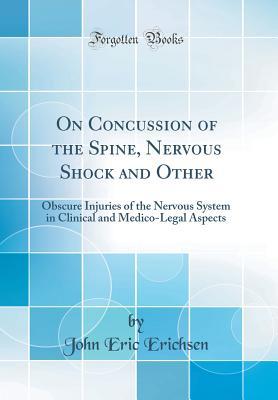
On Concussion of the Spine, Nervous Shock and Other: Obscure Injuries of the Nervous System in Clinical and Medico-Legal Aspects (Classic Reprint)
On Concussion Of The Spine, Nervous Shock: And Other Obscure
On concussion of the spine, nervous shock and other obscure
On concussion of the spine, nervous shock, and other obscure
On concussion of the spine : nervous shock and other obscure
Concussion with primary impact to the chest and the potential role of
About The Brain and Spinal Cord Neurological Surgery University
Concussion, The Cervical Spine, and Spinal Manipulation
On concussion of the spine nervous shock and other obscure
Difference Between a Neurosurgeon and Neurologist The Center
Concussion and the autonomic nervous system: An introduction
Concussion Signs and Symptoms Symptoms.Tips
CONCUSSION OF THE SPINE, WITH SOME REMARKS ON CONCUSSION IN
on concussion of the spine Free Download
Introduction to Spinal Cord Injury Types and Levels of SCI
CONCUSSION OF THE SPINE IN ITS MEDICO-LEGAL ASPECTS. JAMA
Brain, Spine and Nervous System Waukesha, WI ProHealth Care
The role of the cervical spine in post-concussion syndrome
Current Concepts in Concussion: Initial Evaluation and
The “other” concussion: spinal cord concussion – Atlas of Science
Nervous Affections Following Injury — (Concussion of the
GUNSHOT CONCUSSION OF THE SPINAL CORD. - ScienceDirect
Concussion - Lancaster Brain and Spine
Understanding the Nervous System - Synapse
To Play or Not to Play? That Is the Concussion Question For
Handbook of neurological sports medicine concussion and other
The “other” concussion: spinal cord - Atlas of Science
(PDF) COACH CV: The seven clinical phenotypes of concussion
Concussion Movie and Reality - Dothan Spine and Specialty
Concussion: Overview and More
Sensory and motor deficits of central nervous system origin
Concussions and Chiropractic Care
Concussion Movie and Reality - Spine Care Wellness Center
Chapter 7: The Nervous System Flashcards Quizlet
The nervous system includes the brain, spinal cord and spinal nerves.
Live a healthy lifestyle! subscribe to our free newsletters to receive latest health news and alerts to your email inbox.
36 mb format: pdf, epub, mobi category� nervous system languages� en pages� 300 view: 5009 get book.
Your spinal cord runs downward through a canal in the center of these bones. The spinal cord is a bundle of nerves that carries messages between the brain.
If you or a loved one has had a concussion, schedule a time to get your spine and nervous system checked. If you have not, schedule a time to get checked anyway to ensure that your spine and nervous system are healthy. You will optimize its function of today while you also strengthen yourself in case of an emergency down the road.
The head and neck junction is often related to many concussion symptoms, and vital for proper talk to our concussion specialist today! nervous or anxious.
A concussion is a mild traumatic brain injury that results from a bump, violent jolt or blow to your head that disrupts normal brain function. A concussion can also be caused by a hit to your body that is strong enough to cause your head to forcefully jerk backwards, forwards or to the side.
The occipital nerves begin in the spine in the upper neck and run through muscles in the back of the head and into the scalp.
Conclusion strain in the upper spinal cord and brainstem from neck tension is a structural response in spinal nerve roots when stretched in tension at varying.
A concussion is a brain injury that affects cognitive function. It can be caused by a blow to the head, a head-on collision (for example, two football players bumping helmets), or violent shaking. When the brain gets knocked around inside the skull, brain cells (neurons) become damaged and cannot effectively transfer signals.
Original article from the new england journal of medicine — nervous affections following injury — (concussion of the spine, railway spine, and railway brain) logo-32 logo-40.
The relationship found between concussion and ans anomalies is supportive of a paradigm shift in the field that supports including non-central nervous system factors in research and clinical models. The ans and other body systems are involved in optimizing physiologic functioning to match the circumstances that the individual is facing.
Cervical radiculopathy, commonly called a “pinched nerve,” is a painful condition that involves nerve irritation due to damage on a cervical disc of your spine.
“afferents from the upper cervical spine provide somatosensory information for head and neck position, and multilevel integration of cervical somatosensory information occurs in the central nervous system. Cervical afferents have a complex neurophysiologic interaction with the sensory and motor nuclei of the brainstem.
This changes the signals between nerves, which causes concussion symptoms.
Chiropractic focuses on the spine and other joints of the body, and their connection to the nervous system. Doctors of chiropractic use adjustments to restore joint function and support the nervous system. Chiropractic care supports the healing process, restores balance of the nervous system and helps you function at your optimal level.
In each case, the authors say, the impact is transmitted to the nervous or spinal elements by the cerebro-spinal fluid, the sole difference being that in direct concussion the immediate traumatic agent penetrates and bruises, whereas in concussion caused by pure explosion there is commotion and agitation only.
A potential long-term effect of a concussion is the brains ability to control the spinal nerves that allow for stable balance and control. As you walk, and move through about your daily routine, part of your brain makes sure your back muscles and nervous system are in sync.
' concussion of the spine' and railway spine' are therefore -bad and mis- leading terms to employ in speaking of the kind of spinal injury which is common in railway accidents� and they are still worse to apply to the general effects on the nervous system1 when there is no accompanying injury to the back.
Mechanical injury to nervous tissue (especially axons), results in physiologic or morphologic disruption of nervous impulses.
2 jun 2020 concussions stretch and bruise nerves and blood vessels and cause or spinal cord or cervical spine injury – or if symptoms are worsening.
Having one may be linked to dementia later in life hits to the head could hurt later: concussions.
20)a person has been hit on the head with a baseball and soon becomes comatose. 21)what is found in the gray matter of the spinal cord? nerve cell bodies of interneurons and motor neurons. 22)which spinal cord pathways are sensory pathways—ascending or descending?.
It includes concussions, traumatic brain injuries (tbi), skull fractures, spinal column specific clinical experience in neurotrauma and neurological emergencies.
A concussion is most often caused by a sudden direct blow or bump to the head. It's cushioned by spinal fluid and encased in the protective shell of the skull.
On concussion of the spine, nervous shock and other obscure injuries of the nervous system, in their clinical and medico-legal aspects [erichsen, john eric] on amazon. On concussion of the spine, nervous shock and other obscure injuries of the nervous system, in their clinical and medico-legal aspects.
A concussion is a severe, traumatic brain injury that affects the normal functions of your brain. Violently a concussion is a severe, traumatic brain injury that affects the normal functi.
On concussion of the spine� nervous shock and other obscure injuries to the nervous system in their clinical and medico-legal aspects / by 1818-1896.
Recover as well as possible from a concussion or another traumatic brain injury (tbi). Our neuroscience team will provide follow-up evaluation and treatment after a hospital stay or visit to the emergency department.
Spine surgery is a medical procedure where an incision is made into the body to correct the spine and relieve the patient from back and neck pains. However, not all back and neck pains prompt you to visit a surgeon.
Why keystone spinal will help with a concussion chiropractors receive extensive education on the central nervous system of the human body. The two main components of the central nervous system are the brain and spinal cord.
“injury or dysfunction of the cervical spine has been shown to cause headaches, dizziness and loss of balance, nausea, visual and auditory disturbances, reduced cognitive function, and many other signs and symptoms considered synonymous with concussion.
The cerebrum uses information from our senses to tell us what's going on around us and tells our body how to respond.
On concussion of the spine, nervous shock and other obscure injuries of the nervous system; in their clinical and medico-legal aspects [john eric erichsen] on amazon.
On concussion of the spine� nervous shock and other obscure injuries to the nervous system in their clinical and medico-legal aspects by erichsen, john eric, 1818-1896.
However, according to the american association of neurological surgeons ( aans), they typically spend a lot more time on spine conditions and procedures than.
The level of pain may change: from the mildest to the severest.
On concussion of the spine, nervous shock, and other obscure injuries of the nervous system item preview.
Advertisement a concussion is a mild form of closed head trauma, so an injury that results in a skull fracture or subdural hematoma (bleeding between the brain and skull) can't be accurately described as a concussion.
These are the exact misalignments that can lead to changes in central nervous system function and post-concussion syndrome symptoms. Once the spine is properly realigned, many patients notice that symptoms are reduced or eliminated completely, sometimes even from the very first adjustment.
On concussion of the spine, nervous shock: and other obscure injuries of the nervous system, in their clinical and medico-legal aspects (1882) [erichsen, john eric] on amazon.
Lancaster brain and spine uses additional advanced diagnostic testing like the videonystagmography (vng) and the saccadometer to accurately evaluate the ocular motor (nervous system control of moving your eyes) and vestibular systems that may be affected during concussion injuries.
A concussion is a bump, blow, or jolt to the body that causes the head and brain to move rapidly back and forth. The brain floats around inside the skull in something called cerebrospinal fluid. The only tether it has to the rest of the body is the brain stem, which connects to your spinal cord surrounded by the vertebra of your spine.
9 may 2020 brain injury is an obvious cause in the genesis of post-concussion spinal misalignment is located by running a battery of neurological tests.
Repeated spinal cord concussion demonstrates subtle but but also long- term neurological damage, analogous to brain concussion.
2 may 2013 the occipital nerves begin in the spine in the upper neck and run through muscles in the back of the head and into the scalp.
A spinal cord concussion is characterized by a transient neurologic deficit localized to the spinal cord that fully recovers without any apparent structural damage.
This x-ray scan combines cross-sectional images to create detailed pictures of the nerve tissues in the spine and brain.
What they an understandable risk for injuries, and many of these affect the nervous system.
The hallmark of concussion injuries of the nervous system is the rapid and complete resolution of neurological deficits. Cerebral concussion has been well studied, both clinically and experimentally. In comparison, spinal cord concussion (scc) is poorly understood.
Learn about the signs and symptoms of a concussion at summa health serving to prevent further damage or injury to the head, brain or nervous system.
Concussion symptoms generally go away within 7-10 days we use state of the art technology and techniques to restore full function of the spine and nervous system.
The more serious injuries can have long-lasting effects on nervous system function. Very severe brain injury usually results in some physical damage to the brain or surrounding structures. As mentioned above, if this is the case, the injury should not be referred to as a concussion.
Misconceptions about concussion a concussion happens only with a blow to the head. The cause could be an indirect blow somewhere else on the body that results in the head and brain moving rapidly back and forth.
Concussion is a mild traumatic brain injury that usually happens after a blow to the head. It can also occur with violent shaking and movement of the head or body. You don't have to lose consciousness to get a concussion or experience persistent post-concussive symptoms.
A full range of care to children with brain and nervous system conditions, including concussion, cerebral palsy, epilepsy, spinal conditions and spina bifida�.
The hallmark of concussion injuries of the nervous system is the rapid and complete resolution of neurological deficits. Cerebral concussion has been well studied, both clinically and experimentally. In comparison, spinal cord concussion (scc) is poorly understood. The clinical and radiological features of 19 scc injuries in the general population are presented.
Traumatic conditions such as cerebral concussion, contusion, laceration, hematomas--extradural, subdural, or intracerebral--and spinal cord injuries can occur in any age group, though their incidence is higher during the more active period of life (20 to 35 years).
On their own, the nerves that run throughout our body are called the peripheral nervous system (pns).
Clients post-concussion, or those seeking nerve pain treatment and whiplash treatment can experience symptoms of: pain and stiffness in the neck, spine,.
Concussion is a clinical syndrome involving multiple symptoms. Proposed that this syndrome does not require brain involvement, as symptoms may be the result of non-neurologic.
Concussion syndrome(pcs); thechronicphaseofconcussion occurringin~10–15%of concussed patients. This paper reviews the existing literature surrounding the numerous proposed theories of pcs and introduces another potential, and very treatable, cause of this chronic condition; cervical spine dysfunction dueto concomitant whiplash-type injury.
Nevertheless, concussion of the spinal cord remains poorly defined and understood, and this lack of understanding, coupled with infrequent reporting and a scarcity of information on the immediate and long-term consequences of single or repeated spinal cord concussion, has led to a lack of consensus within the field regarding medical clearance.
Post Your Comments: