Read online What Gender is Motherhood?: Changing Yoru?ba? Ideals of Power, Procreation, and Identity in the Age of Modernity (Gender and Cultural Studies in Africa and the Diaspora) - Oyèrónkẹ́ Oyěwùmí file in PDF
Related searches:
The new roles of men and women and implications for families and
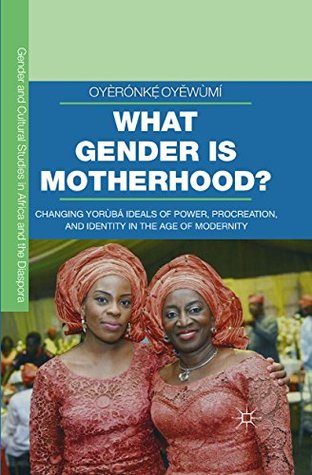
What Gender is Motherhood?: Changing Yoru?ba? Ideals of Power, Procreation, and Identity in the Age of Modernity (Gender and Cultural Studies in Africa and the Diaspora)
Gender-Role Attitudes and Behavior Across the Transition to
Motherhood and the Gender Productivity Gap
Feminism and the change of women - UKEssays.com
The Changing Face iof Motherhood - Social Research
The changing social narrative on Japan's entrenched gender roles
Change and Continuity in Social Protection in Latin America
Gender, spatiality and motherhood: intergenerational change in
Mums with cameras: Technological change, entrepreneurship and
(DOC) THE CHANGING DYNAMICS OF MOTHERHOOD IN EMMA DONOGHUE'S
Fatherhood and Motherhood in a Diverse and Changing World
Madness Multiplies as Mom and Son Change Gender Together
How Working Mothers Can Overcome Bias - The Riveter
Serena Williams On Women’s Equality, Motherhood And Her
A stunning chart shows the true cause of the gender wage gap
Furthermore, there has been an awareness of western culture, in current times that the female gender role is classified as: ø a “stay at home-mother” ø a “career woman” in actuality, women are posed with a double burden: the need to harmonize job and child care reduces the spare time of women.
What gender is motherhood? changing yorùbá ideals of power, procreation, and identity in the age of modernity.
It’s no question that serena williams is a powerhouse on the court. But the tennis star and mom also uses her power off the court. She has long fought for women’s rights and equality, not shying away from calling out discrimination in her sport.
26 sep 2020 the government has tried to make it easier for women to balance working lives and motherhood by funding programs such as day care.
Changing yoruba ideals of power, procreation, and identity in the age of modernity: changing yorùbá ideals of power, cultural.
The social issues research centre, march 2011 2� the 1950s were the years in which men’s attitudes to what had previously been seen as ‘women’s work’ began to change and their contributions began to increase. This was due mainly to the impact of the second world war and the fact that many women had been.
Changing yorùbá ideals of power, procreation, and identity in the age of modernity gender and cultural studies in africa and the diaspora: author: oyèrónkẹ́ oyěwùmí: edition: illustrated: publisher: springer, 2016: isbn: 1137521252, 9781137521255: length: 262 pages: subjects.
His study is among a growing body of research that suggests what we often think of as a gender pay gap is more accurately discussed as a childbearing pay gap or motherhood penalty.
In the simplest terms, a gender creative—or gender-expansive—child is one who rejects expected gender roles and stereotypes. Diane ehrensaft, a developmental and clinical psychologist in the san francisco bay area and the director of mental health and founding member of the child and adolescent gender center, introduced us to this phrase in her first book called gender born, gender made.
1 may 2007 back programme area: gender and development (2000 - 2009), in social protection in latin america: mothers at the service of the state?.
Changing yorùbá ideals of power, procreation, and identity in the age of modernity (inglês) capa comum – 9 dezembro 2015.
Buy gender and cultural studies in africa and the diaspora: what gender is motherhood. Changing yorùbá ideals of power, procreation, and identity in the age of modernity (paperback) at walmart.
These changing priorities can mean mothers become less responsive to classic job incentives like wages and more attracted to work-life.
Changing yorùbá ideals of power, procreation, and identity in the age of modernity by oyèrónkẹ́ oyěwùmí there is significant religious and linguistic evidence that yorùbá society was not gendered in its original form.
A what gender is motherhood? h [electronic resource]� b changing yorùbá ideals of power, procreation, and identity in the age of modernity / c by oyèrónkẹ́ oyěwùmí.
29 apr 2016 there is significant religious and linguistic evidence that yorùbá society was not gendered in its original form.
The trend of self-definition through motherhood continues with 71% reporting that they are most strongly defined by their motherhood, an uptick from the 67% who said this in 2019 and the 59% who said this in the 2018 survey.
In this research paper, i have made an attempt to analyze the changing dynamics of motherhood in emma donoghue’s room. The concept motherhood is used as a tool to propound the feminist aspect using subversion for reclamation and reparation.
The meanings associated with motherhood and motherhood practices vary across historical, sociocultural, and political contexts. Despite the great variation, even within specific countries at one point in time in the practices of motherhood, discourses about what exactly constitutes “good” mothering and who should and should not mother exist.
Changing yorùbá ideals of power, procreation, and identity in the age of the invention of women: making african sense of western gender discourses.
Gender and power in modern yoruba: what gender is motherhood? changing yoruba ideals of power, procreation and identity in the age of modernity.
1 nov 2020 what gender is motherhood? changing yoruba ideals of power, procreation and identity in the age of modernity.
That’s the focus of the new book what no one tells you: a guide to your emotions from pregnancy to motherhood, co-authored by psychiatrists alexandra sacks and catherine birndorf. In the book, sacks and birndorf seek to educate readers about the stage of life called “matrescence,” which is the developmental transition to motherhood.
Also limiting change has been the persistence of nineteenth-century ideals of motherhood as essential to womanhood and fundamentally different from fatherhood. Second-wave feminists emphatically called for gender equality in parenting, and fathers’ involvement in childcare has increased, albeit in complex and incomplete ways.
Motherhood is often defined as an automatic set of feelings and behaviors that is switched on by pregnancy and the birth of the baby, it is also seen as moral transformation whereby a woman comes to terms with being different in that she ceases to be an autonomous individual because she is one way or the other attached to another her baby.
The hope is that continuing legislation toward closing the gender pay gap, and companies like these reaching 50 percent women employees in the near future (with others following suit), will lead to lessening motherhood bias in the workplace. But change doesn’t only begin with politicians or in the corporate boardroom.
T2 - what gender is motherhood? changing yoruba ideals of power, procreation and identity in the age of modernity.
Find helpful customer reviews and review ratings for what gender is motherhood. Changing yorùbá ideals of power, procreation, and identity in the age of modernity (gender and cultural studies in africa and the diaspora) at amazon.
By phrasing the theme in terms of fatherhood and motherhood—and by listing the terms alphabetically (which is not the norm)—i was trying to hammer home the point that, at the 1997 conference, fatherhood as well as motherhood would be on the agenda. Last but not least, let me say something about the phrase in a diverse and changing world.
What four game-changing mothers have to say the way our culture supports working mothers needs to change.
“what gender is motherhood? is a beginning rather than an ending, as it poses an important challenge to feminist history and theory that projects the world in hegemonic ways. Oyěwùmí’s contemporary examples of the chilling effect, on scholarship, of widespread acceptance of a natural male-dominated ethos among the yorùbá are disconcerting to say the least.
Post Your Comments: