Read online The Repressed Memory Epidemic: How It Happened and What We Need to Learn from It - Mark Pendergrast file in PDF
Related searches:
Anaesthetic could be used to wipe bad memories and phobias from
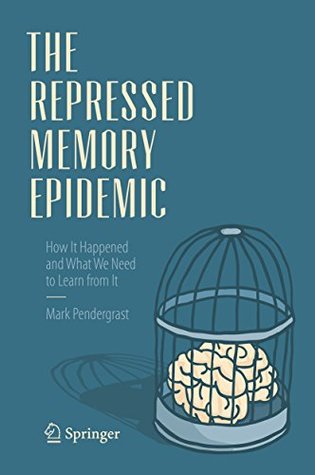
The Repressed Memory Epidemic: How It Happened and What We Need to Learn from It
5. Controversies over repressed and recovered memories
Repressed Memory, Multiple Personality Disorder and Satanic
Recovered Memories, Extended Statutes of Limitations and - CORE
The Debate Over Repressed and Recovered Memories
Repressed and Recovered Memories - IResearchNet
Repressed memory and false memory - ScienceDirect
Lawyers and Memory: The Impact of Repressed Memory
Questions and answers about memories of childhood abuse
Recovered Trauma Memories and Hypnosis - Abuse
During the 1980s, claims of childhood sexual abuse based on recovered memories led to a spate of highly publicized court cases.
The impact of recovering memories that have been repressed for years can be a debilitating process in your trauma healing. They have been repressed for a reason; that reason being that when a person goes through significant trauma, the brain shuts down, dissociation takes over and as a survival technique, the trauma(s) get unconsciously blocked and tucked away from you and stored into.
In fact, it was a mainstream psychological fad, and the majority of therapists and the general population still believe in the discredited theory of repressed.
The idea behind repressed memories is that certain experiences are so traumatic that the brain purposefully “forgets” or “blocks” the memory, as a protective mechanism.
It traces the present-day resurgence of a belief in repressed memories in the general public as well as among many clinical psychologists, psychiatrists, social.
The repressed memory epidemic: how it happened and what we need to learn from it this book offers a comprehensive overview of the concept of repressed memories. It provides a history and context that documents key events that have had an effect on the way that modern psychology and psychotherapy have developed.
These works show that making claims about traumatic memory solely based on generalizations from research on nontraumatic memory, and focusing on the constructs of ‘repression’ and ‘repressed memory,’ can often be misleading tactics and confusing distractions.
Over false memories for sexual abuse before ery of memory, memory syndrome epidemic subsequently recovered.
The repressed memory epidemic will be of interest to researchers and clinicians as well as undergraduate and graduate students in the fields of psychology, sociology, cultural studies, religion.
The recovered memory project was created so that victims of childhood sexual abuse can recall these memories and allow the healing process to begin (cheit,.
Christopher barden, phd, jd psychiatric times, vol 31 no 6, volume 31, issue 6 how the repressed-recovered memory–multiple personality disorder iatrogenic epidemic-surely one of the most tragic chapters in the history of psychiatry, psychology, and psychotherapy-ended, and how psychotherapy patients came to be protected by informed consent.
The validity of repressed memories and the accuracy of their recall through hypnosis: a case study from the courtroom.
This chapter explains how the repressed memory epidemic began. For years, the extent of real childhood sexual abuse was unrecognized and its impacts were minimized. In reaction, a group of feminist therapists near boston encouraged women to talk about incest and other forms of always-remembered child sexual abuse.
An exploration of the cultural context that produced the repressed memory epidemic of the 1990s. The repressed memory epidemic will be of interest to researchers and clinicians as well as undergraduate and graduate students in the fields of psychology, sociology, cultural studies, religion, and anthropology.
An epidemic of false memories a gripping edition of this american life explores the ‘recovered memory movement’ of the 1990s where patients became convinced that they had experienced horrific, sometimes supernatural, abuse as children, led on by credulous therapists who used techniques now know to cause false memories.
22 mar 2020 is it possible to remember a repressed memory during hypnosis? at the end of the 1990s, the epidemic of recovered childhood traumas died.
As i observed in victims of memory, my book on the repressed memory epidemic of the late 20 th century (roughly 1985-1995), it is likely that, during that time period, over a million people came to believe that they had been sexually abused throughout their childhoods but had repressed the memory and completely forgotten it until adulthood.
The epidemic of repressed memory claims emerged in the mid-1980’s in a climate of national remorse for past failure to acknowledge the problem of child abuse and incest. Statistics on the prevalence of sexual abuse varied widely, with some stating that as many as one in every four women had been victimized.
The repressed memory cases are another outlet for women's rage over sexual violence. Although women's anger is certainly justified in many cases, and may be justified in some repressed memory cases too, it is time to stop and ask whether the net of rage has been cast too widely, creating a new collective nightmare.
Repressed memories are memories that have been unconsciously blocked due to the memory being associated with a high level of trauma. Typical incidents where repressed memory occurs in individuals.
15 may 1996 these false memories of childhood sexual abuse have destroyed pritchard, feverish epidemic of sex abuse therapy, wash.
This chapter reviews the results and aftermath of the repressed memory epidemic of the late twentieth century. The sex abuse panic is a direct descendant of the search for repressed memories.
4 dec 1994 i had lived, somewhat uneasily, in the grip of this false memory for years.
Many legal and psychological professionals believe that the recovery of repressed memories represents the social and mental health crisis of the decade. 35 it may also be one of the most significant and complex legal crises. Courts and social service agencies throughout the country are wrestling with the challenges and problems arising through recovered memory therapy, as are legislatures, therapists, professional organizations, and law enforcement agencies.
Many people question whether repressed memories are real or just pseudo memories generated from the subconscious. Some experts believe that in trying to unveil these repressed memories, a person ends up creating a false memory of the event or what they believe happened – rather than uncovering the actual memory.
Repressed means that the memory was not simply forgotten, nor was it deliberately kept secret. Because of the traumatic nature of the murder, eileen's mind reacted by removing the memory from her consciousness. The memory disappeared without a trace and was sealed off from consciousness for two decades.
Following are some questions and answers that reflect the best current knowledge about reported memories of childhood abuse. They will help you better understand how repressed, recovered, or suggested memories may occur and what you can do if you or a family member is concerned about a childhood memory.
A scientist-practitioner gap in beliefs about repressed memory. The article is so flawed that one scarcely knows where to begin. It is a sure sign that something is seriously wrong when an article contains a significant misrepresentation in the second sentence.
Learn about the controversy in the psychology field about whether or not repressed memories can or should be recovered, or if they're accurate.
Editor’s note: in a related book, memory warp, pendergrast takes a critical look at the phenomenon of repressed memory.
Repression is one of the most haunting concepts in psychology. Something shocking happens, and the mind pushes it into some inaccessible corner of the unconscious. Repression is one of the foundation stones on which the structure of psychoanalysis rests.
8 jun 2020 pandemic amnesia: recovering the memory of the 1918 influenza outbreak unfurls the society and culture of 1918 to investigate why an event.
In the 1980-1990’s, there was an epidemic of cases with well-meaning therapists, often through hypnosis, “recovering” memories of childhood sexual abuse that never happened. This included a wave of reports of what was called “satanic ritual abuse.
Over the past 30 years, peter and pamela freyd’s view of the nature of memory has been widely accepted. Numerous mainstream media outlets have reported on how an epidemic of “repressed memories” has wreaked havoc on parents like the freyds, who are regularly portrayed as upstanding members of their communities.
The repressed memory epidemic: how it happened and what we need to learn from it is an academic textbook published by springer, intended for college and university students as well as professional psychologists, criminologists, sociologists, and american studies specialists.
The concept of “repressed memory,” known by the diagnostic term dissociative amnesia, has long fueled controversy in psychiatry. During the 1980s, claims of childhood sexual abuse based on recovered memories led to a spate of highly publicized court cases.
Going back into these memories may help a person contextualize a situation and see that they misplaced blame at the time of the incident. Talking through these memories with a professional may help the patient “let go” of the memory. Not all therapists will attempt to pull out repressed memories to deal with trauma.
While one cannot deny that repressed and recovered memories have had an effect on individuals, their families, and our legal system, little credible evidence exists for massive repression. Moreover, most claims of repression and recovered memories have alternative explanations such as ordinary forgetting or exposure to suggestive situations.
On item (2), memory experts agreed less often with the statement “traumatic memories are often repressed” compared to clinical psychology prac- titioners,.
Finally, in 2017 mark pendergrast published a related book to memory warp. The repressed memory epidemic: how it happened and what we need to learn.
Reports of recovered memories in therapy, informed consent, and generalizability: response keywords: repressed memory, trauma, abuse, psychotherapy, memory war, recovered memory therapy the repressed memory epidemic.
Repressed memory occurs when trauma is too severe to be kept in conscious memory, and is removed by repression or dissociation or both. At some later time it may be recalled, often under innocuous circum- stances, and reappears in conscious memory.
Repressed memories are a hotly debated topic within the medical community. We'll take a look at what they are, what else might explain them, and what to do if you think you're experiencing them.
Traumatic memories do not get repressed, and our clinical arrogance in the face of these facts harms our patients and is damaging in a way that therapists must shun.
If the client believes that they have a repressed memory, the therapist may be able to guide the conversation more actively. The first psychologist to bring the idea into the mainstream was sigmund freud.
Brown's (see record 84-26142) article regarding managed care and false memory movement.
After repressed memory therapy movement emerged in the mid-1980s, many alarmed and concerned researchers and clinicians began studying the issue closely and found that the suggestive techniques recommended in the self-help literature and employed by many therapists led patients to evaluate mental images incorrectly as accurate memories of actual events.
The essence of the theory of memory repression is that it is memories for traumatic experiences that are particularly likely to become unavailable to conscious.
31 may 2018 keywords repressed memory, trauma, abuse, psychotherapy, memory the repressed memory epidemic: how it happened and what we need.
The recent epidemic proportions of the “false memory syndrome” have spawned a number of books providing both information and counsel. Victims of memory by mark pendergrast is one of the thickest, most extensively researched of such volumes, written by a man whose two grown daughters have accused him of serious.
3 oct 2017 the repressed memory epidemic: how it happened and what we need to learn from it the modern diagnosis of dissociative identity disorder.
After a case study that exemplifies the repressed memory cases that became in an epidemic of false convictions, mistaken verdicts, and confused court orders.
Between 60 and 89 percent of modern mental health clinicians believe that traumatic memories can be forgotten, repressed, or suppressed.
The false memory syndrome -- a condition in which a person's identity and interpersonal relationships are centered around a memory of traumatic experience which is objectively false but in which the person strongly believes. Note that the syndrome is not characterized by false memories as such.
Many people think that the repressed memory epidemic, which crested in the 1990s, is over. But as pendergrast demonstrated, it never really went away, and it is coming back into an alarming vogue.
Repressed memory is a controversial, and largely scientifically discredited, claim that memories for traumatic events may be stored in the unconscious mind and blocked from normal conscious recall.
Find helpful customer reviews and review ratings for the repressed memory epidemic: how it happened and what we need to learn from it at amazon.
Post Your Comments: