Read online The Economics of Emancipation: Jamaica and Barbados, 1823-1843 - Kathleen Mary Butler file in PDF
Related searches:
The Economics of Emancipation: Jamaica and Barbados, 1823-1843
The Economics of Emancipation: Jamaica and - Amazon.com
Kathleen Mary Butler, The Economics of Emancipation: Jamaica and
Jamaica - Growth and Structure of the Economy - Country Studies
Amazon.com: The Economics of Emancipation: Jamaica and
The Economics of Emancipation: Jamaica & Barbados, 1823-1843
The economics of emancipation : Jamaica & Barbados, 1823-1843
EMANCIPATION IN JAMAICA.; Free-Labor and Slave-Labor. - The
Slave Population And Economy In Jamaica 1807-1834 - UNEP
Sovereignty And The Soil: Chief Richard Currie And The Rising
The New Poor Law and Emancipation - ScholarWorks at WMU
Kingston Churches to Focus on Emancipation and Economic
Caribbean freedom : economy and society from emancipation to the
Free Labour and the Plantation Economy - Oxford Scholarship
Accounting, coercion and social control during - eGrove
Slaves and Slavery in Jamaica - lead page - Jamaican Family Search
(PDF) Slavery, capitalism, incorporation and the Close Harbour
The Economics of Emancipation, Jamaica and Barbados, 1823
Slaves and peasants in the era of emancipation
Jamaica Plantation Era and the Abolition of Slavery
The History of Jamaica: From Colonialism and Slavery to
Race and Class in the Post-Emancipation Caribbean SpringerLink
Orlando Patterson and the Postcolonial Predicament The Nation
Abolition of Slave Trade and Slavery in the British Empire
NEW PERSPECTIVES ON SLAVERY AND EMANCIPATION IN THE BRITISH
Plantation Economy in the Caribbean in the Slavery and the
The Culture And Traditions Of Jamaica - WorldAtlas
“EMANCIPATED” JAMAICANS – LANDLESS AND PENNILESS& THE RISE
Jamaica was an indispensable colony in the eighteenth century, but its importance faded after the end of slavery in 1834 and even more after emancipation.
On august 1, 1834, “frees” slaves in jamaica were required to undergo a transitional period as ‘apprentices’ before full emancipation. “slave owners” were given monetary compensation of £6,161,927 for their loss of property in slaves.
World directory of minorities and indigenous peoples - jamaica social and economic conditions for emancipated africans did not improve.
Jul 31, 2020 plantation coffee in jamaica, 1790-1848 was recently published by the economic interests of the newly emancipated labouring population.
Jamaica - jamaica - cultural life: jamaica’s cultural development has been deeply influenced by british traditions and a search for roots in folk forms. The latter are based chiefly on the colourful rhythmic intensity of the island’s african heritage. Jamaican culture is a product of the interaction between europe and africa. Terms such as “afro-centred” and “euro-centred,” however.
The corresponding figure for jamaica was 85 per cent, for demerara it was 93 per cent. The emancipation bill, passed by the british parliament in 1833, dictated that enslaved people would remain in the service of their former masters as part of a system of ‘apprenticeship’, which was lifted in 1838.
With the abolition of slavery in 1834, the british viewed education as a tool to integrate ex-slaves into the colonial economy. The british believed that integrating ex-slaves into the economy would result in a peaceful lower class.
Mar 26, 2021 excellent and thorough treatment of major demographic aspects of british caribbean slavery from abolition of slave trade to slave emancipation.
The development of the peasantry in the british caribbean, in terms of its growth and in terms of the ability of the freed people to engage in it, was, however, limited by the unavailability of land. Hence, the peasantry developed only in a few of the territories such as jamaica, trinidad, the windwards and british guiana.
A journal of a voyage to, and residence in, the island of jamaica, from 1801 to 1805, and the subsequent events in england from 1805 to 1811, by maria, lady nugent.
After 1838, the effects of emancipation in the british west indies varied from island to island, but the plantation economy was one that declined overall.
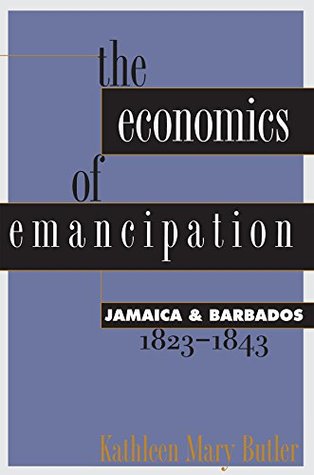
The economics of emancipation examines the effect of compensated emancipation on colonial credit, landownership, plantation land values, and the broader spheres of international trade and finance. Butler also brings the role and status of women as creditors and plantation owners into focus for the first time.
The responses to the caribbean economy and slavery, kingston, jamaica: jamaica publishing.
The economics of emancipation: jamaica and barbados, 1823-1843 [butler, kathleen mary] on amazon.
' in this first comparative analysis of the impact of the award on the colonies, mary butler focuses on jamaica and barbados, two of britain's premier sugar islands.
Booktopia has the economics of emancipation, jamaica and barbados, 1823-1843 by kathleen mary butler. Buy a discounted paperback of the economics of emancipation online from australia's leading online bookstore.
With this definition in mind, holt explores the problems of freedom in jamaica between 1838 and 1938, which is an understudied period in jamaican history. The first emancipation was the abolition of slavery and the freeing of slaves.
In this first comparative analysis of the impact of the award on the colonies, mary butler focuses on jamaica and barbados, two of britain's premier sugar islands. The economics of emancipation examines the effect of compensated emancipation on colonial credit, landownership, plantation land values, and the broader spheres of international.
By the mid-19th century, just years after emancipation, the caribbean's economy began to fail as a result of dropping sugar prices and planters in regions like jamaica saw their plantations collapse. In jamaica, by 1865 sugar production was half of what it had been in 1834.
The first group of indians arrived in trinidad in 1845 on the ship called the fatel razack. Later that year, the second group arrived to jamaica on the blundell hunter. Landholders in the british west indies believed that the east-indians would be able to make a great contribution to society.
Emancipation stalwarts in jamaica on august 1, 1838, thousands of ex-slaves who had gathered at town centres and churches in the british caribbean territory broke into joyous celebrations after hearing the final words of the emancipation declaration, affirming their full freedom from slavery.
This research project attempts to put an economic value on the benefits derived by patrons of the emancipation park using the contingent valuation methodology.
Jamaica - jamaica - economy: jamaica’s economy is mixed but increasingly based on services, notably tourism and finance. Since independence in 1962, the country has developed markedly but unevenly. Mining and manufacturing became more important to the economy in the latter part of the 20th century, while the export of agricultural commodities declined.
This chapter focuses on the effects of emancipation and the emergence of free labour on the productive system of the caribbean plantations during the first.
The co-operative movement in jamaica, like in most developing countries, had its origin in the peasantry. Its growth and development can be traced back to emancipation (1838) to the present time, spanning a period of over 160 years.
The abolitionists were now seeking immediate emancipation, and after 1832 the reformed house of commons was more responsive to popular pressure” (porter 476). White slave owners in jamaica, whose entire existence depended upon the slave-plantation economy, fought passionately against the emancipation movement.
By 1844, there were 2,500 individuals in this class in antigua, 6,000 in british guyana, 12,000 in barbados and 17,500 in jamaica.
Butler's cogent and compelling analysis of the economics of emancipation explores the profound yet differing effects that the payment of this indemnity had on two of britain's pre-eminent sugar colonies, jamaica and barbados (whose slaveowners received £6,161,927 and £1,721,345, respectively, out of the total disburse-.
Plantation economy: jamaica at the time of emancipation british caribbean and the atlantic economy in honour of richard sheridan will take place during.
Slaves in jamaica slave sales manumissions insurrections and emancipation and book jamaica in 1850 look at some of the causes of the economic problems.
Jamaica and trinidad and tobago celebrate 57 years of independence on august 6 and 31 respectively. Norman manley expressed the view that his generation brought political independence and it was the task of future generations to deliver economic independence, termed “economic liberation” by some in africa.
Aspects of the condition of indian women in jamaica 1845-1945 245 5 david trotman women and crime in late 19th century trinidad 259 section seven social policy and class formation introduction 261 1 carl campbell social and economic obstacles to the development of popular education in post-emancipation jamaica, 1834—1865 262 2 keith laurence.
Thirteen years ago, yale’s center for british art, in collaboration with the institute of jamaica museum, commemorated the bicentennial of the abolition of the slave trade with an exhibition focused on the 1834 emancipation of slaves. The exhibit centered on the work of the jamaican artist isaac mendes belisario (1795–1849).
Imagine that you are a peasant living in jamaica in the 1890s. Outline three factors that aided the development of the peasantry. Outline four effects of the peasantry on british caribbean economy and society.
Jul 22, 2017 jamaica, like most british caribbean colonies, was overwhelmingly slave and black. They revolted in 1831 partly because of an economic depression that and wrote articles in the newspapers, attacking emancipation.
In theory, emancipation meant the end of this legal, economic and social system which treated the enslaved as property, and the acknowledgement of each individual as a human being of equal worth and value as any other, and, therefore, deserving of social justice, rights, and respect, within the community of persons.
Jamaica in 1850 or, the effects of sixteen years of freedom on a slave colony. The double-edged sword of emancipation and the truth about its effects. After jamaican slaves were fully emancipated in 1838, the local economy collapsed.
On august 1, 1838, the british parliament ended the apprenticeship program, which had become an enormous administrative burden, and granted full emancipation to more than 300,000 slaves in jamaica. In the view of the planters and colonial officials, emancipation meant slaves would become a docile proletariat working on the sugar estates.
The economic aspects of the adjustments to the end of slavery in jamaica, and michael moohr, the economic impact of slave emancipation in british.
Some would contend that emancipation in jamaica and in the wider british world in the nineteenth century was not a direct result of revolutionary struggle, but was a natural conclusion due either to parliamentary abolitionism and reform or to the alleged waning economic viability of racial slavery.
Economics of emancipation: jamaica and barbados, 1823-1843: butler, kathleen mary: 9780807821947: books - amazon.
In this first comparative analysis of the impact of the award on the colonies, mary butler focuses on jamaica and barbados, two of britain's premier sugar islands. The economics of emancipation examines the effect of compensated emancipation on colonial credit, landownership, plantation land values, and the broader spheres of international trade and finance.
The main feature remains needs-based entrepreneurs - people who are self-employed mainly because they have no options. This class of entrepreneurs perhaps contributes modestly to the economy, but they sustain a culture of entrepreneurship and provide a variety of social benefits outside of profits.
Impoverished white women represented the largest group of poor relief claimants in barbados and jamaica.
Emancipation through servitude: aspects of the condition of indian women in jamaica, 1845-1945 / verene shepherd. Women and crime in late 19th century trinidad / david trotman social policy and class formation. Social and economic obstacles to the development of popular education in post-emancipation jamaica, 1834-1865 / carl campbell.
Economic value of public infrastructure in jamaica: the case of emancipation park. Cal fitness, especially among the elderly, and for youth socialization, which.
On this day in history, august 1, 1834 in jamaica, the emancipation declaration was read from the steps of the old kings house in spanish town, st catherine, the country’s capital at the time. Emancipation day was officially introduced as a public holiday in jamaica in 1893.
In 1831, jamaica experienced what is considered one of the largest, longest and most influential slave rebellions of the three emancipation era revolts in the british caribbean. In jamaica at the time, slaves far outnumbered their white counterparts by twelve to one (12-1). Samuel sharpe, a self educated slave, was born in jamaica in 1801.
Butler's cogent and compelling analysis of the economics of emancipation explores the profound yet differing effects that the payment of this indemnity had on two of britain's pre-eminent sugar colonies, jamaica and barbados (whose slaveowners received £6,161,927 and £1,721,345, respectively, out of the total.
The economics of emancipation: jamaica and barbados, 1823-1843.
The 19th church driven emancipation lecture, to be presented this year as part of jamaica's 50th anniversary celebrations, will feature an explosion of national.
Jamaica is a diverse multiracial country, yet it is marked by deep forms of economic hierarchy. It is a small island of just under 3 million people, but its musical forms and athletes have earned.
But neither the shortcomings of abolitionism nor the calamitous economic consequences of slavery’s destruction blind davis to the genuine achievement that emancipation represented.
The history of spanish town dates back to 1534 when it was settled by the spanish and established as the nation's capital city. Captured by the british in 1655, it was renamed st jago de la vega and continued to serve as jamaica's capital for another.
Jan 23, 2017 some would contend that emancipation in jamaica and in the wider british world in the nineteenth century was not a direct result of revolutionary.
This article situates the 1850–1851 cholera epidemic in the british colony of jamaica within prevalent debates about the moral condition of jamaicans of african descent, the economic crises of the 1840s and 1850s, and ultimately the effectiveness of emancipation.
The british west indies had suffered its fair share of economic difficulties, and argument ensued over whether abolition had helped or harmed. The relevance to america’s situation was obvious: the united states held 4 million people in bondage, and the debate over the peculiar institution’s future threatened to tear the nation apart.
The price of emancipation: slave-ownership, compensation and british society at the end of slavery, cambridge studies in economic history. The mighty experiment: free labor versus slavery in british emancipation.
Jamaica's emancipation rebellion of august 1, 1831 was a major event in the continuous slave rebellions in which our black ancestors fought continuously to regain their stolen freedom.
As emancipation day approaches, it is indeed apropos to delineate the economic and political aspects of the abolition of slavery, albeit the european enslavement of african people or maafa— the “great disaster.
Slavery was ended throughout the caribbean during the nineteenth century, at different times in the different territories. 4 in haiti and the dominican republic the change was achieved by local action; otherwise it was managed more or less by the colonial power, usually with some compensation to former slave owners by the use of monetary payments and periods of regulated labour, such.
Wiener publishers� london� james curry publishers� kingston, jamaica� irp, 1996.
This article takes a closer look at each of these components of the culture of jamaica. Social beliefs and customs� many of the social beliefs and customs of jamaica are largely influenced by the tendency to exist outside of the formal economic sector. Some examples of this can be seen in the informal money savings schemes employed by the people.
Economic decline the effects of emancipation in the british west indies varied from island to island, but the plantation economy declined overall. Yearly sugar production slumped by 36% between 1839 and 1846, but as output dropped, the price of sugar rose and 50% of the jamaican plantations went out of business.
A descriptive account of the island of jamaica: with remarks upon the cultivation of the sugar-cane, throughout the different seasons of the year, and chiefly considered in a picturesque point of view; also observations and reflections upon what would probably be the consequences of an abolition of the slave-trade, and of the emancipation of the slaves.
By the 1780’s it was a reasonably important producer with a total annual production of 18,000 pounds of white and brown sugar by 1810 production doubled to 37,000 tons and was growing steadily but cuban output grew less rapidly compared to either jamaica or brazil and was only 12 percent of the world market.
When the economic burden grew so excessive that planters were unable to resist pressures for emancipation, suggesting that even failed slave.
The doctrine of emancipation, that free labor is cheaper than slave labor is proved to demonstration; but where the free labor force is insufficient for the cultivation of the soil, as in jamaica.
Excerpts from the book jamaica in 1850 look at some of the causes of the economic problems of jamaica in 1850.
Post Your Comments: