Download A-Z Guide to Your Child's Behaviour: A Parent's Easy and Authoritative Reference to Hundreds of Everyday Problems and Concerns from Birth to 12 Years - David Mrazek | ePub
Related searches:
A to Z Guide to Your Child's Behavior: A Parent's Easy and
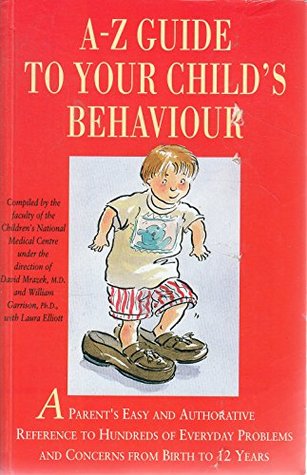
A-Z Guide to Your Child's Behaviour: A Parent's Easy and Authoritative Reference to Hundreds of Everyday Problems and Concerns from Birth to 12 Years
Behavior Guidance and Discipline - CCR&R - Arizona
Discipline and children - Better Health Channel
8 Essential Positive Parenting Tips and Discipline Guide
Child Discipline Methods: Permissive, Authoritative, and More
Parenting and Behavior Worksheets for Children Therapist Aid
A guide to keeping your child safe and reassured as coronavirus
Child and Family Team - AHCCCS
Connecting Behavior and Consequences for Kids With ADHD
Make it Count: Guide for parents and carers Mental Health
Ages and Stages of Development - Child Development (CA Dept
Screen time and children: How to guide your child - Mayo Clinic
A-Z Guide for Sensory-Friendly Travel and Vacationing - Chicago
Arizona's Infant and Toddler Developmental - First Things First
The A - Z Guide to Feelings And Emotions
School-Age Kids - Behavior and Emotions
Toddlers and Biting: Finding the Right Response • ZERO TO THREE
Strategies to Support Social, Emotional, and Behavioral Needs
Discipline - American Academy of Child and Adolescent Psychiatry
Social and Emotional Learning: Strategies for Parents Edutopia
All treatment decisions are driven by the child and family team. **this guide frequently references the hca central and northern arizona gsa behavioral health.
Set reasonable limits for your child's screen time, especially if your child's use of screens is hindering involvement in other activities. Consider these tips: prioritize unplugged, unstructured playtime. Create tech-free zones or times, such as during mealtime or one night a week.
Learn how to improve the parent-child relationship when it becomes strained with cmi's parents guide to problem behavior.
School-age (6-8 years) common: will need knowledge and have questions about physical development, relationships, sexual behavior; menstruation and pregnancy, personal values. Experiment with same-age and same gender children, often during games or role-playing.
Mindfulness, simply put, means paying attention to the present moment. It means taking a step back and noticing the world around you, as well as noticing your inner experiences like thoughts and feelings. With practice, mindfulness can help adults and children cope with problems such as stress, anxiety, and adhd.
Sep 1, 2020 for a child to make a connection between a specific behavior and past experiences to guide their behavior.
Disciplining your child means teaching them responsible behaviour and self-control.
It is a good idea to store the child's records in a notebook/binder that you can bring to child and family team (cft) meetings and other appointments.
How to get your child to want to be good (2/10) - spanish how to get your pre-teen/teen to want to be good (11 and older) my child's problem behavior: info for caregivers.
Choose which box set takes your fancy and we'll send a complete series of great teaching ideas and expertise direct to your inbox. It's completely free, and you'll get pdf downloads of all the material to add to your own library of professional development.
The best way to improve behavior is to give children a lot of attention when they are doing something you like and remove your attention when they are doing something you do not like. An easy way to increase good behaviors is by describing their behaviors and praising them when they make a real effort.
Some autistic children may behave in ways that put a lot of strain on you and your family. You may hear health professionals call some behaviours challenging. These behaviours include: stimming – a kind of repetitive behaviour; meltdowns – a complete loss of control over behaviour.
Common conditions but sometimes it seems that these goals are miles away from your child's current behavior.
Other signs of negative attention-seeking behaviour in children are – faking illnesses to get some of your time causing drama or throwing tantrums at home or in public settings causing harm to others and trying to play hero.
Problem-solve together – when your child exhibits specific behavior problems, excerpt from our book positive discipline: a teacher's a-z guide onyakkers.
Many children with asd engage in repetitive movements or unusual behaviors such as flapping their arms, rocking from side to side, or twirling. They may become preoccupied with parts of objects like the wheels on a toy truck. Children may also become obsessively interested in a particular topic such as airplanes or memorizing train schedules.
A child with a good sense of self is happier, more well-adjusted, and does better in school. Strategies for fostering self-esteem include giving your child responsibilities, allowing her to make age-appropriate choices, and showing your appreciation for a job well done.
Sep 10, 2020 we help our patients to be heard, to be understood, and to be accepted. We provide quality support to children and families to help them.
You might even consider asking your pediatrician for a medical note explaining your child's condition to help reinforce the support you need.
You should also always be sure to frame the reprimand to the child’s behavior, not the child.
By minimizing the stress a divorce creates, being patient as everyone adjusts to the new situation, and responding openly and honestly to your kids' concerns,.
These responses could unintentionally be rewarding problem behavior. Increase your child’s academic, social, and self-help skills. Improve ability to focus on tasks, comply with tasks, and increase motivation to perform.
Find out more about the encyclopedia, its funders, team, collaborators and reproduction rights.
Chances are, you’ve heard or read something about toxic stress—maybe from the media, from a physician or other medical professional, or from a family member, friend, or neighbor. You may feel overwhelmed by all of the toxic stress information out there. And, unfortunately, it’s very easy to find misleading or incorrect information.
Aug 17, 2017 in the uk, anxiety disorders are believed to affect 5–19% of all children and adolescents and around 2–5% of children aged 12 or under.
Allow for negotiation and flexibility, which can help build your child's social skills. Whenever possible, consequences should be delivered immediately, should relate to the rule broken, and be short enough in duration that you can move on again to emphasize the positives.
In your child’s behavior just like adults, in tough situations, children’s anxiety or fear might show up as a new behavior.
Ensure success in your classroom and beyond with engaging, developmentally appropriate leveled books at 29 reading levels. Graduated levels of difficulty build students' confidence while increasing comprehension and fluency.
Red flags for abuse and neglect are often identified by observing a child’s behavior at school, recognizing physical signs, and observations of dynamics during routine interactions with certain adults. While the following signs are not proof that a child is the subject of abuse or neglect, they should prompt one to look further.
What should you do if you think your child is having trouble with reading? sometimes children just need more time, but sometimes they need extra help.
Mercedes-benz stadium has reimagined the fan experience to create a fan first environment for all events.
Your school-age child can better articulate feelings, frustrations, likes, and dislikes. Use these strategies to promote good behavior and self-discipline.
Positive-discipline-a-teachers-a-z-guide-turn-common-behavioral-problems-into- opportunities-for- globe are struggling with children's behavioral problems.
Positive discipline teaches your child’s heart and mind at the same time. Learn how to change your child’s behavior without using punishments, yelling or bribes. When my son was four years old, he was sweet, funny and quite mischievous. Just a moment unsupervised and something was likely to get opened, spilled or broken.
Our guides cover the basics of mental health and learning disorders in children and adolescents and tackle a broad range of other concerns.
Your child might behave in a challenging way to get your attention. If this is the case, consider not responding directly to their behaviour – although you should not ignore them completely. But if their behaviour puts them or someone else at risk, you'll need to intervene as calmly as possible.
A to z guide to your child's behavior: a parent's easy and authoritative reference to hundreds of everyday problems and concerns from birth to 12 years.
Thinking through the results of your choices, 29% planning ahead caring about others’ feelings feeling sad when caring about others’ feelings, feeling sad when 45% a friend is unhappy, being good at making and keeping friends respecting the values/beliefs of people of different 43% races/cultures.
Oct 12, 2015 everyone responds in positive ways to praise, children included, so this will encourage your child to behave in desirable ways.
Aug 26, 2019 child behavioral therapy is a type of children's therapy designed to improve difficult or problematic behavior that stems from trauma, anxiety,.
An age-by-age guide to teaching your child life skills are you preparing your child to be independent? teaching your child life skills is not only important for self-care and sufficiency— it also allows him to feel empowered, works on socialization and reasoning, and helps develop healthy self-este.
Look for a child care provider who understands children’s learning styles and includes reading, learning numbers, art activities, rhyming, and problem solving in your child’s daily activities. Also, find out how your provider encourages your child to understand and benefit from daily activities and experiences.
This could be the birth of a new baby, moving house, a change of childminder, starting playgroup or something much smaller. Children are quick to notice if you're feeling upset or there are problems in the family.
Plan is a document that states when the children will be with each parent ( parenting time) and how major decisions will be made (legal custody).
Children with disruptive behavior disorders (dbd) show ongoing patterns of uncooperative and defiant behavior. The most common types of these disorders include disruptive behavior disorder not otherwise specified (dbd nos), oppositional defiant disorder (odd) and conduct disorder (cd).
Cbhi partners with child and family serving state agencies, providers, and payers to ensure that services meet the individual needs of the child and family, are easy for families to find and access, and make families feel welcomed and respected.
A-z guide to your child's health raising a happy, healthy, well-adjusted child is one of the most demanding and challenging of all human endeavors.
The skills listed are what most children can do by the end of that grade. Speech-language pathologists, or slps, work with children who have speech and language problems.
Buy the a to z guide to raising happy, confident kids: read kindle store reviews - amazon.
Preschooler discipline and guiding child behaviour discipline is helping your child learn how to behave – as well as how not to behave. Discipline works best when you have a warm and loving relationship with your child and encourage good behaviour – for example, by using routines, clear instructions and plenty of praise for behaving well.
Our mission is to improve your family's quality of life through in-home autism treatment.
Your child's behaviour is a communication about how they’re feeling. When your child is acting out, it can be useful to think of an iceberg. The difficult behaviour is the tip, but there are likely to be a range of emotions hidden under the surface.
•challenging behavior is a form of communication –a child's solution to a problem • the function of the behavior is as important as the behavior –obtain –avoid/escape –change the level of stimulation •it is the behavior that is inappropriate, not not not the the function.
Children sometimes argue, are aggressive, or act angry or defiant around adults. A behavior disorder may be diagnosed when these disruptive behaviors are uncommon for the child’s age at the time, persist over time, or are severe.
While every child is unique and special, sometimes they encounter emotions, feelings or behavior that cause problems in their lives and the lives of those around them. Families often worry when their child or teenager has difficulty coping with things, feels sad, can't sleep, gets involved with drugs, or can't get along with family or friends.
Jun 20, 2014 new! raising a happy, healthy, well-adjusted child is one of the most demanding and challenging of all human endeavors.
Exercise is also a great way to calm the nervous system and to teach physical self-control. Team sports that require advanced skill and social interactions probably aren’t a good idea, but depending on your child’s age, skills, and fears, going to the gym or the pool, rolling a ball across the floor, or heading out for a family walk or run can help reduce stress and feed sensory needs.
The chances of a child, of any age� to not have heard about this is really low, says robin gurwitch.
Please join us in giving a deserving child the gift of education.
Here are nine child-rearing tips that can help you feel more fulfilled as a parent. Kids start developing their sense of self as babies when they see themselves through their parents' eyes. Your tone of voice, your body language, and your every expression are absorbed by your kids.
Normal behavior in children depends on the child’s age, personality, and physical and emotional development. A child’s behavior may be a problem if it doesn’t match the expectations of the family or if it is disruptive.
Relatives, child care providers, friends, teachers, the community, the home setting, and other aspects of the environment can play a crucial role in the behavior of your child. For example, if your child is showing aggressiveness towards other children at school, you may want to find out all the possible sources of their aggressive behavior.
Requests for aid and service should be made at least thirty (30) business days prior to event. The ada facilitator may be unable to fill a request if made less.
May 11, 2019 here's your a to z of emotional well-being: a – appreciate. Make sure that your child has perspective of the things that they have.
The journal of clinical child and adolescent psychology has published a study reviewing the research on treatments for disruptive behavior problems in children aged 12 years and under. This report also updates the evidence for what works best to treat children with disruptive behavior problems.
Biting is a very common behavior among toddlers, which means there are a lot of concerned parents out there. The good news is that there is a lot that parents and caregivers can do to reduce and, ultimately, eliminate biting.
Information about working in or operating early childhood education services including outside school hours care. Plus, information for parents and carers on the importance of early childhood education, choosing a service and transition to school.
The first three years of life are a period of incredible growth in all areas of a baby’s development. Learn how the earliest relationships with caregivers can promote healthy brain development, how young children build social and emotional skills, and ways you can support language and literacy development starting from birth.
Behavior guidance helps children develop empathy, control and self-esteem. Guiding children's behavior is something practiced throughout the day even when.
Parenting a child who has intense emotions is an effective guide to de-escalating your child's emotions and helping your child express feelings in productive ways. You'll learn strategies drawn from dialectical behavior therapy (dbt), including mindfulness and validation skills, and practice them when your child's emotions spin out of control.
Pb4l school-wide looks at behaviour and learning from a whole-of-school as well as an individual child perspective.
Children with types of special needs that affect behavior and development rarely respond to the same disciplinary strategies used for typical children. The 10 strategies here may go against what you've been led to believe (or have read) about child-rearing—but then, exceptional children require exceptional ingenuity.
When your child is a baby, yeah, you're changing diapers, nursing, and burping the baby every five minutes. Okay, as your kid gets older, the less minute-by-minute attention is required. Then again, though, with a baby, your worries are relatively small (and usually are centered around bodily functions).
We fully understand your concern, but the only people you should take advice from in your situation are trained and qualified professionals you have met face to face and fully understand your situation.
Watching your child grow and develop is one of the most exciting parts of being a parent, especially in the early months when it seems every day brings a new skill. Knowing what to expect from your child will help you in many ways.
As a parent you give your children a good start in life—you nurture, protect and guide them. Parenting is a process that prepares your child for independence.
Post Your Comments: