Download The Politics of the Second Slavery (SUNY Series, Fernand Braudel Center Studies in Historical Social Science) - Dale W. Tomich | PDF
Related searches:
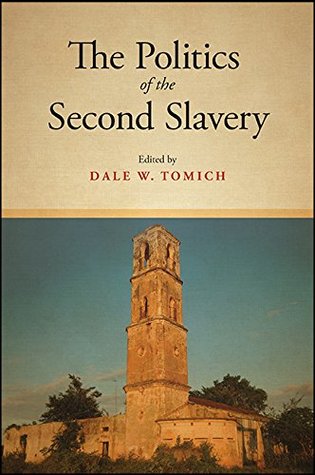
The Politics of the Second Slavery - SUNY Press
The Politics of the Second Slavery (SUNY Series, Fernand Braudel Center Studies in Historical Social Science)
The politics of the second slavery
The Politics of the Second Slavery (SUNY Series - Amazon.com
The Politics of the Second Slavery ed. by Dale W. Tomich
The Second Slavery and World Capitalism: A Perspective for
Introduction, the Second Slavery - JSTOR
The Second Slavery: Modernity in the Nineteenth-Century - JSTOR
The Politics of the Second Slavery. Edited by Dale W. Tomich
The Politics of the Second Slavery by Dale W. Tomich NOOK
The Politics of the Second Slavery by Dale W. Tomich - Books
The Politics of the Second Slavery - Tomich, Dale W. (EDT
The politics of the second slavery in SearchWorks catalog
Introduction, The Second Slavery
Chapter 14: The Politics of Slavery, 1848-1860
The Political Legacy of American Slavery The Journal of Politics
The North, The South, and the Politics
The South and the Politics of Slavery - TCU
Politics of Slavery and the Coming Civil War - Oxford Handbooks
The Election of 1860 - Tulane University
The Politics of Second Slavery: Conflict and Crisis on the
Politics of the Second Slavery, The by Dale W. Tomich
United States - Secession and the politics of the Civil War
Political Realignment in the 1850s - CliffsNotes
The Case for Reparations by Ta-Nehisi Coates - The Atlantic
The Democratic Party Is the Party of Slavery and Segregation
The Debate over Slavery in the United States Encyclopedia.com
Slavery and Historical Capitalism during the Nineteenth Century
STRUCTURES AND IDENTITY IN THE SECOND SLAVERY: THE
Africans in America/Part 4/Eric Foner on the role of westward - PBS
The Persistent Effects of Slavery on Political and Racial Attitudes in
A Nation Divided: The Political Climate of 1850s America The
Silence and the politics of compassion. Commemorating slavery in
Disintegration of the Second Party System Encyclopedia.com
Causing the Civil War - Teachinghistory.org
Reconstruction and Its Aftermath - The African American Odyssey: A
How the idea of 'modern slavery' is used as political click bait
The Political Legacy of American Slavery - Nelson A. Rockefeller
Realignment of the Party System Boundless US History
Atlantic Slavery and the Slave Trade: History and
The Southern Argument for Slavery [ushistory.org]
The politics of the second slavery: Slavery & Abolition: Vol
The Man Who Came in Second The National Endowment for the
The politics of the second slavery ed. by Dale W. Tomich
Parliament and the British Slave Trade - Black History Month 2021
Party Realignment and the New Deal US House of
Politics of the Jacksonian Era
Founding of the Republican Party - ThoughtCo
15.2: The Collapse of the Second Party System - Humanities
Milestones: 1784–1800 - Office of the Historian
The Election of 1860 [ushistory.org]
The Anti-Secessionist Jefferson Davis - Boston National
According to Abraham Lincoln and the Second American
Major American Political Parties of the 19th Century
The Election of 1864 [ushistory.org]
Slavery, the Constitution, and a Lasting Legacy Montpelier
13. The Sectional Crisis THE AMERICAN YAWP
The Distinction Between Slavery and Race in U.S. History AAIHS
Black Abolitionists and the end of the transatlantic slave
The Birth of Race-Based Slavery - Slate Magazine - Politics
American evangelicalism and the politics of whiteness The
This book examines the historiography of nineteenth century slavery from the perspective of the “second slavery.
It is the first republic of people of african descent and the second oldest nation while haiti's independence as a nation started with a slave rebellion the notion.
Sheds new light on both pro and antislavery politics in the nineteenth-century americas.
16 oct 2018 for the second slavery approach, on the other hand, the question of slave labor is not taken in isolation as a factor of production.
The major american political realignment of the mid-1850s had been brewing for decades due to fundamental divisions over the place of slavery in american politics.
At the same time, the warmer southern states continued to rely on slaves for their farming economy and cotton production.
The illegal slave trade and the “second slavery” promoted the 19th century industrial development in britain and france, but also in latecomer industrial countries.
The near-absence of black believers in white churches was the condition for the development of a distinctly white evangelicalism. As historian ed blum has demonstrated, the popular revivals of dwight moody and the growth of the woman’s christian temperance union in the late 19th century encouraged a solidarity between northern and southern protestants that was built on a shared whiteness.
After stephen douglas introduced the kansas-nebraska bill, some northerners thought they needed to create a new political coalition to stop the spread of slavery. As the nation approached the midterm elections in 1854, people opposed to the extension of slavery aligned in hopes of undermining the democrats’ control of the national government.
On all sides of the slavery issue, politics became increasingly militarized. The year 1855 nearly derailed the northern antislavery coalition. A resurgent anti-immigrant movement briefly took advantage of the whig collapse and nearly stole the energy of the anti-administration forces by channeling its frustrations into fights against the large number of mostly catholic german and irish immigrants in american cities.
Many of these political parties were interrelated or shared common roots; some shared ideological underpinnings originating from mutual opposition to the dominant political party and leaders of the time, while others found themselves united in their advocacy for a common cause, such as the abolition of slavery.
The second is the natural slave in society and in interaction with their master. According to aristotle, natural slaves' main features include being pieces of property,.
The loyal republic: traitors, slaves, and the remaking of citizenship in civil war america.
The abolitionist movement was the effort to end slavery, led by famous abolitionists like frederick douglass, harriet tubman, sojourner truth and john brown.
9 aug 2016 here, humanism is neither accepted at face value nor discarded as damaged goods, but salvaged and held to its promise.
• for a short time, 1852-1854, slavery as a political issue was almost eclipsed by the anti-immigrant, anti-roman catholic american party. In part the american party capitalized on workers’ fears of immigrant competition and ethnocentrism, but it was the immigrants’ tendency to support the democratic party that frightened northern voters.
Congress enacted two of the three provisions of the american system, moreover, a strong federal government might interfere with the institution of slavery.
The first recounts the events of the sectional crisis up to the compromise of 1850.
Aristotle views slaves as the means by which the master secures his livelihood. He defends slavery by noting that nature generally consists of ruling and ruled.
European slave traders brought large numbers of african slaves to the americas by sail. Spain and portugal had brought african slaves to work in african colonies such as cape verde and são tomé and príncipe, and then in latin america, by the 16th century. The british, french and dutch joined in the slave trade in subsequent centuries.
Minor parties included the anti-masonic party, an important innovator from 1827 to 1834; the abolitionist liberty party in 1840; and the anti-slavery expansion free soil party in 1848 and 1852. The second party system reflected and shaped the political, social, economic and cultural currents of the jacksonian era� until succeeded by the third party system�.
24 feb 2020 second, by exploring the genuinely popular basis of american antislavery in the north — and its tentative but significant connections with.
Since women could not vote, petitioning congress was their only means of political action. The executive committee of the american anti-slavery society reminded women in its second annual report (1835) that “the debate in congress on slavery in the district of columbia was called forth by petitions signed by 800 ladies of new york.
Beginning from this vantage point, the politics of the second slavery brings together a group of international scholars to reinterpret pro- and antislavery politics.
Second, in chapter six, aristotle points out that not everyone currently held in slavery is in fact a slave by nature.
Market was really two different political economies based on two different labor systems.
We show that contemporary differences in political attitudes across counties in the american south in part trace their origins to slavery's prevalence more than.
Politics had an impact on one of the most important domestic issues—protective tariffs. The tariff of 1824 imposed duties on woolen goods, cotton, iron, and other finished products to protect textile mills in new england and industries in the mid‐atlantic states.
Early scholarship focused on the united states and tended to articulate views of slavery that reflected elite sources and perspectives. 12 inspired by the us civil rights movement, second-wave feminism, and wider global decolonization campaigns, the 1960s and 1970s witnessed the rise of approaches to the study of slavery rooted in new social history, which aimed to understand slaves as central historical actors rather than mere victims of exploitation.
3 dec 2019 in a bracing new analysis of the civil war era, karp revisits the dynamics leading up to the abolition of slavery.
Fear of annexation by the united states from the canadian government site on canada's confederation (1867), we learn that there was a movement in the united states to annex canada and that the republicans made annexation one of the issues in the 1864 presidential election.
31 may 2018 this volume explores political dimensions of the concept of second slavery, developed by dale tomich in through the prism of slavery (2004),.
Trial capitalism, modern political regimes, and liberal ideologies. In contrast, the concept of the second slavery calls attention to the world-historical processes that transformed the atlantic world be-tween the 1780's and 1888, when slavery was abolished in brazil. These processes resulted in the decline of old zones of colonial.
In abraham lincoln and the second american revolution, james macpherson argues that the civil war and the end of slavery were a revolution in every sense suggested by the question—political,.
Cuba and brazil, two of the largest slave empires the world has known and the last two to abolish the nearly 400-year-old institution in the new world, have.
Articles gathered in this collection explore the history of at- lantic slavery during the period of what we have elsewhere called the second slavery (tomich,.
A deeper examination, however, reveals an important distinction between the political interests of slaveholders and the broader category of the thing we call “race. ” “race” was indeed a critical factor in the establishment of the constitution. At the time of the founding, slavery was legal in every state in the union.
A second source of political division was southern alarm over the slavery debates in congress in 1819 and 1820. Many southern leaders feared that the missouri crisis might spark a realignment in national politics along sectional lines.
Thus, if the writings on slavery in the second treatise were not written to offer support for the afro-american slave trade, it may be that they, in conjunction with the sections on the state of war and conquest, were written to allude to king james’s enslavement of his own people.
(the root) — recently thom hartmann published an essay on truthout titled the second amendment was ratified to preserve slavery.
In the north, legislatures, mayors, civic associations, banks.
Beginning from this vantage point, the politics of the second slavery brings together a group of international scholars to reinterpret pro- and antislavery politics both globally and nationally as part of the forces that were restructuring atlantic slavery.
It emerged in 1854 to combat the expansion of slavery into american territories and new states. The theme was “free soil, free labor, free men,” with “free soil” referring to granting western land to farmers. “in 1865, the republicans passed the thirteenth amendment banning slavery.
Q: what is the relationship between slavery and westward expansion? so the expansion of slavery, which became the major political question of the 1850's,.
5 jun 2020 the garrisonians believed that if they worked within the political from 1788 until 1860, only two opponents of slavery, john adams and john.
True, not all southerners supported slavery or the racial segregation that followed it, but like the french during world war ii very few of them actually joined the resistance. They certainly kept electing politicians, at all levels, who vowed to perpetuate white supremacy -- now and forever, in george wallace's memorable words.
While advocating states’ rights, breckinridge declared his loyalty to the union, discounting the notion that disunion could solve the political challenges presented by slavery. Whereas abolitionists believed slavery to be a moral issue, breckinridge regarded it as a political matter.
As america spread into new territories, regional blocs began to form on both sides of the issue. The north was making progress on the abolition front, and state laws began to change regarding slavery. Vermont abolished slavery in 1777, with pennsylvania following suit in 1780, and other states coming up close behind.
Political realignment in the 1850s the presidential election of 1852 marked the beginning of the end of the whig party. With its northern and southern wings divided over the fugitive slave law, the best the party could do was nominate another hero of the mexican war, general winfield scott.
The leading political organization in the north was the republican party. It was composed of former whigs, a smaller number of ex-democrats, as well as members of other parties, including some who had previously supported antislavery parties, such as the liberty party, which had sought to end slavery by political means. Like any party, the republican party contained a broad spectrum of opinions on many issues, including slavery.
The haitian revolution created the second independent country in the americas after the united states became independent in 1783. Political leaders, many of them slaveowners, reacted to the emergence of haiti as a state borne out of a slave revolt with ambivalence, at times providing aid to put down the revolt, and, later in the revolution, providing support to toussaint l’ouverture’s forces.
The american political system in the early 1850s was complicated, and members of a number of factions and minor parties had widely varying degrees of enthusiasm about migrating to a new party. In fact, during the congressional elections of 1854, it seemed that most of the opponents to the spread of enslavement concluded their most practical approach would be the formation of fusion tickets.
Beginning from this vantage point, the politics of the second slavery brings together a group of international scholars to reinterpret pro- and antislavery politics both globally and nationally as part of the forces that were restructuring atlantic slavery. Individual chapters shed new light on the decolonization and nationalization of slavery in the americas, the politics of proslavery elites both within particular countries and across the atlantic region, the abolition of the international.
Until the 1850s the nation precariously balanced the slavery issue. Between the second party system of whigs and democrats in the north and the south.
The emancipation of slaves after the civil war was a major shock to the southern economy:.
Structures and identity in the second slavery: the cuban case, 1800-1940.
Slavery abolition act, act of the british parliament that abolished slavery in most british colonies, freeing more than 800,000 enslaved africans in the caribbean and south africa as well as a small number in canada. The act received royal assent on august 28, 1833, and took effect on august 1, 1834.
Domingue, a french colony in the west indies, led by toussaint-l’ouverture. A series of revolts began on the island shortly after news reached it of the start of the revolution in france in 1789.
The whig party was a political party formed in 1834 by opponents of president andrew thereby launching the ‘second party system’ in they were not formally an anti-slavery party,.
Although an ardent supporter of slavery, southern democrats considered douglas a traitor because of his support of popular sovereignty, permitting territories to choose not to have slavery. Southern democrats stormed out of the convention, without choosing a candidate.
The abolition of the slave trade act (1807) gave the church an opportunity to address the controversial and painful truth that whilst a number of christians, both black and white, mobilised the first mass human rights movement to bring about abolition of the transatlantic slave trade, many of their christian brothers and sisters were committed to maintaining the trade in enslaved africans.
Slavery was the most important and divisive issue in 19th-century american politics and society. At the end of the revolution, the new american nation was divided between the southern states whose economies were heavily dependent on slavery and northern states where slavery was legal but not economically important.
Lincoln, having gotten the constitutional amendment to abolish slavery through congress, began his second term. He discussed slavery throughout his second inaugural address, describing it as not only the cause of the civil war, but that slavery considered as an offence to god, drew god's righteous judgement against the entire nation.
Learn exactly what happened in this chapter, scene, or section of politics and what it means. Perfect for acing essays, tests, and quizzes, as well as for writing lesson plans.
Defenders of slavery argued that the sudden end to the slave economy would have had a profound and killing economic impact in the south where reliance on slave labor was the foundation of their economy.
It is easy to oversimplify the coming of the civil war as a series of steadily intensifying collisions over slavery issues. Focusing solely on the episodes of confrontation loses sight of the fact that american politics provided a mechanism for resolving conflicts — including bitter conflicts over slavery issues — for many years. The crisis of the 1850s was more explosive not because the country faced more-intractable issues than it had before but because the whigdemocratic party system.
Fugitive rousseau is set out in two parts: the first explores the problem of slavery in rousseau’s thought, while the second evaluates rousseau’s different projects for achieving political freedom.
Post Your Comments: