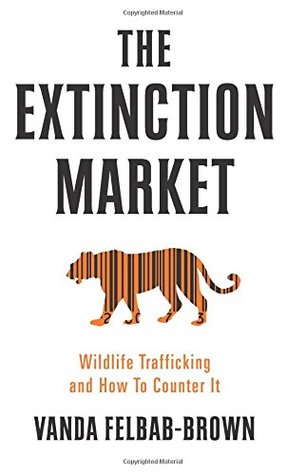
| Title | : | The Extinction Market: Wildlife Trafficking and How to Counter it |
| Author | : | Vanda Felbab-Brown |
| Language | : | en |
| Rating | : | |
| Type | : | PDF, ePub, Kindle |
| Uploaded | : | Apr 03, 2021 |
| Title | : | The Extinction Market: Wildlife Trafficking and How to Counter it |
| Author | : | Vanda Felbab-Brown |
| Language | : | en |
| Rating | : | 4.90 out of 5 stars |
| Type | : | PDF, ePub, Kindle |
| Uploaded | : | Apr 03, 2021 |
Read The Extinction Market: Wildlife Trafficking and How to Counter it - Vanda Felbab-Brown | ePub
Related searches:
The Extinction Market: Wildlife Trafficking and How to
The Extinction Market: Wildlife Trafficking and How to Counter it
The Extinction Market: Wildlife Trafficking and How to Counter It
Unsustainable and illegal wildlife trade WWF
Runway to Extinction: Airports and Airlines in Every Region of the
the extinction market. wildlife trafficking and how to counter it - Oryx
Poaching animals, facts and information
Ten Threatened and Endangered Species Used in Traditional
Wildlife Trade and Trafficking Eurogroup for Animals
In the market for extinction: eastern and central Java
Joe Exotic and Wet Markets Expose Global Wildlife Trade
Illegal wildlife trade and poaching - WWF-Australia - WWF-Australia
Relatedly, each region's exposure to wildlife trafficking activity is driven primarily by its proximity to specific source regions and demand markets.
Wildlife trading is a major black market that has increased alongside rising wealth in asia—a major consumer of wildlife—and the advent of e-commerce and social media websites.
The extinction market explores the causes, means, and consequences of poaching and wildlife trafficking, with a view to finding ways of suppressing them.
The black market for illegal wildlife products is worth an estimated $19 billion a year in tigers, rhinos, pangolins, turtles, sharks, and parrots, towards extinction.
1 traffic report: in the market for extinction: eastern and central java introduction wildlife trade is a major conservation threat in southeast asia (nijman, 2010), with indonesia.
16 apr 2020 wildlife trade is a multibillion dollar business that is under scrutiny due to its impacts on human health, animals, and habitats around the world.
The extinction market: wildlife trafficking and how to counte new paperback book.
9 nov 2020 in its latest analysis of countries implicated in illegal wildlife, the us whose crime index and criminal market scores for wildlife crime were.
Wildlife poaching has negative side-effects that affect local communities, wildlife populations, and the environment. It is a crime fueled by a lucrative black market trade of animal parts.
Illegal wildlife trade is also often unsustainable, harming wild populations of animals and plants and pushing endangered species toward extinction. Endangered animals and plants are often the target of wildlife crime because of their rarity and increased economic value.
Due to poaching, pollution, climate change and habitat loss, extinction has become a global crisis — now more than ever. Although you’d like to imagine the possibility of sea turtles and tigers going the way of the dodo is improbable, extin.
Avoid supporting the market in illegal wildlife including: tortoise-shell, ivory, and coral. Herbicides and pesticides are hazardous pollutants that affect wildlife at many levels. These chemicals take a long time to degrade and build up in the soils before disseminating throughout the food chain.
Each year, hundreds of millions of plants and animals are caught or harvested from the wild and then sold as food, pets, ornamental plants, leather, tourist curios.
Advertisement extinct animals are those species which are no longer living.
Wildlife trafficking and the trade in illegal wildlife products also leads to the disruption of ecosystems, and can accelerate the extinction of species. #act4 moreover, the legal trade also keeps up demand and ensures that the market.
A new analysis predicts that 3,196 animals will join the 5,579 already snared in the global wildlife market.
When an entire species goes extinct, it may seem like a terrible occurrence. But is extinction ever a good thing? get the answer at howstuffworks. Advertisement in the early 1950s, there were an estimated 50 million cases of smallpox worldw.
Plants and animals go extinct for a variety of reasons, including climate change, habitat destruction, hunting and the introduction of nonnative species.
The market for wildlife products is of high value, which makes illegal trade difficult to in order to circumvent the extinction of species as a result of poaching,.
In africa, southern white rhinos, once thought to be extinct, now thrive in protected sanctuaries and are classified as near threatened. But the western black rhino and northern white rhinos have recently become extinct in the wild. The only two remaining northern white rhino are kept under 24-hour guard in ol pejeta conservancy in kenya.
13 nov 2020 in wild animal and plant products is driving species to extinction, but under cites commonly fail to examine markets for wildlife in detail.
From california to china, the first-ever global pollinator survey shows why our food supply is headed for trouble. An award-winning team of journalists, designers, and videographers who tell brand stories through fast company's distinctive.
Illegal hunting and the wildlife trade, like climate change and habitat destruction, are among the causes of the dramatic global extinction of species.
Usa, april 2020— a new analysis of wildlife trafficking the report, runway to extinction: wildlife trafficking in the air transport the illegal trade of wildlife is the fourth largest black market.
Poached by rachel nuwer is more readable, but the extinction market is far more insightful and original. This book stands out among a spate of recent ones about the illicit wildlife trade. Felbab-brown's original take is to compare it to the illegal drugs trade.
Wildlife trafficking on the internet: a virtual market similar to drug trafficking? earth is undergoing a rate of extinction nearly a hundred times higher than normal.
Her most recent book, the extinction market: wildlife trafficking and how to counter it (2017), provides a global perspective on wildlife trafficking and policy-oriented solutions. Dr felbab-brown is a leading expert on conflict, non-traditional security threats, and illicit economies such as drug trafficking, wildlife trafficking, and illegal.
Wildlife trafficking is decimating many endangered species around the globe due to an plant and animal species are now at risk of extinction due to human activities, and cut off supply chains and market access for illegal wildlife.
Together, through the 2014-2024 wildlife crime initiative, wwf and traffic are focusing on stopping poaching, trafficking and buying, and international policy.
30 oct 2020 the illegal wildlife trade has transformed with the growth and accessibility of the internet.
The extinction market is a model of sharp insight into a complex problem that is delivered in clear and compelling prose. International supply chains for prohibited products are a modern plague.
3 jun 2020 wildlife trafficking is defined as the illegal trade, smuggling, poaching, capture or trade threatens the extinction of various animal and plant species. The illegal market demands for endangered wildlife and their.
26 jun 2020 the illegal wildlife trade (iwt) goes beyond market stalls – it's of species of wild animals being pushed to the brink of extinction as a result.
Is a nonprofit, tax-exempt charitable organization (tax id number 52-1693387) under section 501(c)(3) of the internal revenue code.
The illegal trade of wildlife is the fourth largest black market in the world and impacts more than 7,000 species of animals and plants. Runway to extinction is the most comprehensive assessment of wildlife trafficking in the air transport sector to date, and builds on the previous routes reports, flying under the radar (2017) and in plane.
Nearly 23,000 birds were recorded in five markets in surabaya, yogyakarta and malang during a three-day survey, with clear indication that the vast majority were illegally taken from the wild. In the market for extinction: eastern and central java (pdf, 13 mb) reports that 28 of the 241 species were fully protected under indonesian law, which.
The author performed ethnographic fieldwork in three key markets: russia, morocco, and china, and has constructed a detailed picture of how the wildlife trade.
Post Your Comments: