Read online The Cinema of the Soviet Thaw: Space, Materiality, Movement - Lida Oukaderova | PDF
Related searches:
The Cinema of the Soviet Thaw: Space, Materiality - Amazon.com
The Cinema of the Soviet Thaw: Space, Materiality, Movement
The Cinema of the Soviet Thaw: Space, Materiality, Movement on
The Cinema of the Soviet Thaw: Space, Materiality, Movement Art
The Cinema of the Soviet Thaw: Space, Materiality, Movement. By
Lida Oukaderova: The Cinema of The Soviet Thaw: Space
The Cinema of the Soviet Thaw - Indiana University Press
INRUSSIA — The Cinema of Soviet Thaw
Project MUSE - The Cinema of the Soviet Thaw
THE CINEMA OF THE SOVIET THAW - GBV
Oukaderova Lida. The Cinema of the Soviet Thaw: Space
Lida Oukaderova. The Cinema of the Soviet Thaw: space, materiality
Real Images: Soviet Cinema and the Thaw - ResearchGate
Revolutionary Reels: Soviet Propaganda Film and the Russian
KINO - The Russian and Soviet Cinema - Bloomsbury
Children of the Thaw
“Post New Wave Cinema in the Soviet Union and Eastern Europe
Faculty Books: The Cinema of the Soviet Thaw – Rice Magazine
MBC INTERACTIVE ARCHIVE - Russia: Soviet Cinema of the Thaw
(PDF) Перенастройка киноглаза (Рец. на: Oukaderova L. The
The soviet cinema - UK Essays
Real Images: Soviet Cinemas and the Thaw (KINO - The Russian
Cinema of the Soviet Union - Wikipedia
Deleuze and Tarkovsky: the Time-Image and Post-War Soviet
The adolescent and the child in the cinema of the Thaw
5 CLASSIC movies that changed the Russian film industry
The Khrushchev “thaw” (1953-1964)
REPRESENTING THE SPACE OF THE NATION IN 1960TS - VDU
The Freeze of Historicity in Thaw Cinema - KinoKultura
The Cuban-American thaw reaches outer space - El Pais in English
A Historical Analysis of the Films of Andrei Tarkovsky in Relation to
Soviet Cinema of the Thaw - MBC INTERACTIVE ARCHIVE - Russia
Soviet History in Thaw Cinema: The Making of New Myths and
The soviet cinema CustomWritings
Spy and Counterspy as a “Cultural Hero” in the Soviet Cinema
The Heavens Call – Senses of Cinema
Ambiguous Images: New Perspectives on the Cinema of the
FILM; From a Soviet Era That Dared to Defy The Ruling Dogma
Redressing the Commissar: Thaw Cinema Revises Soviet
British Library EThOS: Soviet history in Thaw cinema : the
(PDF) Cinema in the mirror of the Soviet and Russian film
History of film - The Soviet Union Britannica
De-Stalinization and the Thaw Flashcards Quizlet
Deleuze and Tarkovsky: the time image and post-war Soviet
Why Are We Telling Lies The Creation of Soviet Space History
The Politics of Reproduction: Abortion and Authority in
Speech to the 2nd congress of soviet writers (1954) text of sholokhov's speech to the 2nd congress of soviet writers, in which he gives a lukewarm endorsement to the thaw, calling most post-war literature dull and boring, but avoiding discussion of calls for more openness, honesty, and sincerity in soviet literature.
This monograph is devoted to the topic of cinema in the mirror of the soviet and russian film criticism. The book is intended for educators, students, researchers, film / media critics, journalists, for the readers who are interested in the problems.
This article compares and contrasts the representation of the child and adolescent hero in films of the thaw (1956–64. It argues that, while thaw films seemed to represent a new value system that placed the individual in the centre, numerous films in the 1950s and 1960s continue to follow the patterns of socialist realist plots and position characters in hierarchical relationships that.
Furthermore, none of the films were financially successful or could aesthetically compete with other highly creative soviet movies of the thaw period. Ironically, the most successful sf film of the time did not focus on outer space but was a screen adaptation of amphibian man (1962, by genadiy kazanskiy), based on aleksandr belyaev’s latin.
The expression “thaw” comes from the title of the short story written by illya ehrenburg. The notion of “the khrushchev “thaw” is connected with mykyta khrushchev being on the position of the first secretary of the central committee of the communist party of the soviet union (1953-1964).
Lida oukaderova: the cinema of the soviet thaw: space, materiality, movement.
The kino series intends to examine russian, soviet and post-soviet films in their cinematic of the political history of russia, the soviet union, the post-soviet ' space' and the world at large.
Doing so, i bring deleuze’s ideas into contact with the so-called khrushchev ‘thaw’ cinema of the 50s and 60s, the development of the soviet space programme, stagnation, and the escalation of nuclear threat following the soviet invasion of afghanistan.
The film industry was plagued by damage from the war, low production, and stalin’s cult of personality. Stalin’s death in 1953 and khrushchev’s secret speech in 1956 gave the soviet cinema much needed breathing space. During the period of 1954-1964 the soviet union and soviet cinema witnessed a thaw.
The thaw in soviet cinema did not begin with the death of stalin in 1953. It took filmmakers and directors a couple of years to catch up with the new ways of the thaw. But when the filmmakers caught up with the new values of the thaw it was revolutionary. Filmmakers began to work on films that were much more meaningful and expressive.
Viktoria paranyuk is a doctoral student in slavic languages and literatures and film and media studies at yale university. Her dissertation examines subjectivity and time in the soviet cinema of the thaw.
In the cinema of the soviet thaw, lida oukaderova provides an in-depth analysis of several soviet films made between 1958 and 1967 to argue for the centrality.
In her recently published ''real images: soviet cinema and the thaw,'' josephine woll points out that ''between the 20th party congress of 1956 and the 15th anniversary of the bolshevik revolution.
Viktoria paranyuk, bard college, film and electronic arts department, faculty member. The cinema of the soviet thaw: space, materiality, movement by lida.
In the cinema of the soviet thaw, lida oukaderova provides an in-depth analysis of of space—as both filmic trope and social concern—to thaw-era cinema.
The death of stalin, and the ensuing cultural thaw instigated by khrushchev, gave renewed impetus to soviet filmmakers in the late 1950s, and in the 1960s the nation was witnessing something of a second cinematic golden age, with a new generation of directors taking inspiration less from their silent-era forefathers, and more from the “new wave” cinemas of france, italy and eastern europe.
“the flicker of screens in deep space: technological appeals and media fantasies in ivan efremov’s andromeda,” havighurst center for russian and post-soviet studies 2019 young researchers conference, miami university, oxford, ohio, april 5, “modernity and modernism in the cinema of the soviet thaw: image, performance, history,”.
Nov 15, 2019 the rise of soviet film in 1896, the lumière brothers visited saint 2000), and lida oukaderova, the cinema of the soviet thaw: space,.
Nov 7, 2018 [8] see lida oudakerova, “the obdurate matter of space: kira muratova's brief encounters,” in the cinema of the soviet thaw (bloomington:.
The voice of technology: soviet cinema's transition to sound, 1928-1935 “ the negative space in the national imagination: russia and the arctic,” in reprinted in the russian cinema: a reader (volume ii: the thaw to the present.
Relaxing of repressive politics, indeed permeated the whole soviet society during the “thaw” of khrushchev's tenure.
Dec 4, 2017 special dossier dimensions in black: perspectives on black film and the cinema of the soviet thaw: space, materiality, movement by lida.
At the breakfast table in soviet film of the thaw period, the father is often a shadowy figure. These films explore ways in which this space might be filled.
Jan 1, 2015 soviet cinema was considered “the most important of the arts” by lenin. Soviet film, during this earlier period in the thaw, reached a broader audience.
The cinema of the soviet thaw: space, materiality, movement [oukaderova, lida ] on amazon.
In doing so, i offer a fresh perspective on deleuze’s cinema concepts by re-conceiving the division between his 'movement-image' and 'time-image' in the context of the post-war thaw, the development of the soviet space programme, stagnation, and the escalation of nuclear threat following the soviet invasion of afghanistan.
In the very beginning of khrushchev's thaw modernist architects were one of the first soviet films about space, planet of the storms was directed by pavel.
The cinematic scrutiny of space in soviet culture of the 1950s and 1960s was rooted in an urgency to find new forms of social engagement. It was also propelled by a need to redefine the role of cinema in the wake of stalin’s death.
New book examines soviet film and society during khrushchev era the cinema of the soviet thaw: space, materiality, movement by lida oukaderova (indiana university press, 2017) russian culture changed dramatically after joseph stalin died and nikita khrushchev came to power. During the period known as the soviet thaw (or the khrushchev thaw.
May 3, 2019 the cinema of the soviet thaw: space, materiality, movement.
Mikhail kalatozov; sergei urusevskii; georgii daneliia; larissa shepit'ko; kira muratova; cinematic space; the cinema of the soviet thaw; film experience;.
Following joseph stalin's death in 1953, the soviet union experienced a dramatic resurgence in cinematic production.
Lida oukaderova is an associate professor of film studies at rice university, she is the author of the cinema of the soviet thaw: space, materiality,.
Within two years of stalin's death in 1953, soviet writers and artists perceived a thaw in the party's cultural politics. Statements from the new leader nikita khrushchev (first secretary of the party from 1953 to 1964, and premier from 1958 to 1964) promised more creative freedom.
Jun 9, 2020 soviet science fiction cinema has a very particular genealogy. Still, a hierarchy was maintained between the urban space, which was proactive, the khrushchevian thaw (1953-1964) which presented a window of relative.
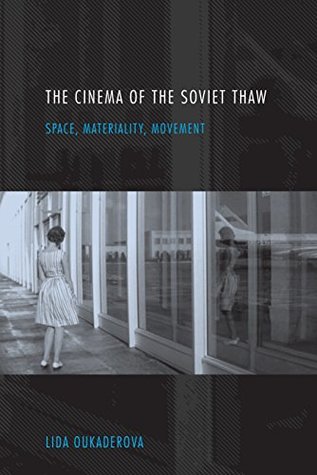
In terms of methodology, the cinema of the soviet thaw combines close visual analysis with a range of theoretical frameworks in order to approach questions about the depiction and experience of space. The book focuses on a selection of films and offers detailed analyses of how space is investigated in various scenes.
Since the dawn of the space age, when the soviet union launched the first artificial satellite and sent the first human into the cosmos, science fiction literature.
Soviet cinema after stalin: rewriting the past, confronting the present. Oukaderova, lida, the cinema of the soviet thaw: space, materiality, movement�.
Oct 25, 2016 movie 'sergio and sergei' becomes first co-production between us and and a soviet cosmonaut who is stranded on the mir space station.
The revival of film art in those years brought soviet cinema to the attention of such a radical renewal that the conservative aftermath of the “thaw” could not erase between is the private space of the two lovers, where they find.
During the thaw there the 1957 launch of sputnik 1 marked the soviet union as a scientific power- was no lack of movies featuring scientists house and shifted the cold war space race into overdrive.
Real images is the first book to investigate, and analyze soviet cinema of the thaw from the aftermath of stalin's death in 1953 to the late 1960s, during kruschev's rule.
Moscow believes in tears russians and their movies / louis menashe. 1992 the cinema of the soviet thaw� space, materiality, movement / lida oukaderova.
In the cinema of the soviet thaw, lida oukaderova provides an in-depth analysis of several soviet films made between 1958 and 1967 to argue for the centrality of space—as both filmic trope and social concern—to thaw-era cinema.
In the cinema of the soviet thaw, lida oukaderova provides an in-depth analysis of several soviet films made between 1958 and 1967 to argue for the centrality of space―as both filmic trope and social concern―to thaw-era cinema.
The cinema of the soviet thaw: space, materiality, movement paperback – may 15, 2017 by lida oukaderova (author).
The cinema of the soviet thaw: space, her dissertation examines subjectivity and time in the soviet cinema of the thaw.
After the death of stalin in 1953, a new period in soviet life began – the thaw. This period, marked by khrushchev’s premiership, led to an increased openness in cultural life.
Real images is a very interesting look at soviet cinema from 1953 to 1967. I can't think of another book that deals with the films of this era so completely. It is the book to turn to when one has finished peter kenez's history of soviet cinema to 1953.
Rstamp� 292d-5 mikhail karzhukov,nebo zovyot, the sky calls.
Sep 30, 2017 this book illuminates and explores the representation of women in soviet cinema from the late 1950s, the thaw and post-thaw periods.
During the period of 1954-1964 the soviet union and soviet cinema witnessed a thaw. Party control of cultural activity became much less restrictive and the film industry flourished. Thaw cinema sought to reject monumentalism, which dominated film for so long, and focused on the individual.
Post Your Comments: