Read online Disasters, Gender and Access to Healthcare: Women in Coastal Bangladesh - Nahid Rezwana | PDF
Related searches:
Disasters, Gender and Access to Healthcare: Women in - Routledge
Disasters, Gender and Access to Healthcare: Women in Coastal Bangladesh
Gender and Disasters - UNDP
Gender and Disasters (Part I) - World ReliefWeb
Gender and Disaster Risk Management GFDRR
Gender and Health in Disasters - WHO World Health Organization
Women, girls and disasters - Gov.uk
Gender and Disasters April 20.indd - PreventionWeb
Four myths about gender and disaster risk reduction
Disasters, Gender and Access to Healthcare Taylor & Francis
Gender and Disasters (Part I) - Connecting Business initiative
GENDER AND DISASTER RISK MANAGEMENT - GUIDANCE NOTES
Gender Equality and Women's Empowerment in Disaster Recovery
GENDER AND NATURAL DISASTERS - PAHO
Gender, disaster, and women's access to contraception and
THE NEEDS OF WOMEN IN DISASTERS AND EMERGENCIES
Natural Disasters, Conflict, and Human Rights: Tracing the
Into the Fire: Disaster and the Remaking of Gender, 2015
Disasters and violence against women and girls - Refworld
Gender and disaster risk reduction: A training pack - MIMU
RECOGNISE THE STRENGTH OF WOMEN AND GIRLS IN
Policies and Actions for Gender and Diversity in Disaster Risk - JICA
Gender Dynamics of Disaster Risk and Resilience
Gender Equality and Disaster Risk Reduction United Nations
Gender and access to land
Gender, Climate Change and Health
Climate change and gender ActionAid UK
How Gender Impacts Water, Sanitation and Hygiene The Borgen
AJEM Gender and disaster recovery: strategic issues and action in
CLIMATE CHANGE AND GENDER IN BANGLADESH - IUCN
Disaster and Gender: - TSpace - University of Toronto
Climate change and natural disasters affecting women, peace and
empowering women and girls in crises - Care International
Applying a Gender Lens to Climate Risk Finance and Insurance
The Gendered Face of COVID-19: Women and Access to Justice
gendered human rights analysis of Ebola and Zika: locating
Gender Inequalities and Food Insecurity: Ten years after the
Introduction to Gender and Disaster Risk Management World
PAPER OPEN ACCESS Disaster, gender, and space: Spatial
A Disaster on Top of a Disaster: How Gender, Race, and Class
Women and girls with disabilities United Nations Enable
Disaster experiences of women with disabilities: Barriers and
Race, Gender and Class Lessons from Hurricane Katrina
Protection, gender and inclusion - International Federation
Gender and Climate Change - WEDO
Minimum standards for protection, gender and inclusion in
GENDER AND NATURAL RESOURCES MANAGEMENT
Good practices for integrating gender equality and women’s
Gender and food security, food distribution and nutrition in
Domestic violence will spike in the bushfire aftermath, and
Resources Specific to Emergency/Crisis and Disaster Settings
Women’s access to stimulus packages and post Covid-19 gender
Gender, Water and Sanitation: A Policy Brief UN-Water
Goal 11: Sustainable Cities and Communities - SDG Tracker
Gender dynamics affecting maternal health and health care
[PDF] Gender Differences in Access to Extension Services and
Durham E-Theses Disasters and access to healthcare in the
Gender and Agriculture World Bank Group
The Gender and Access to Health Services Study - Final Report
Additionally, women are usually first responders in community responses to natural disasters, leaders in disaster risk-reduction, and contribute to post recovery by addressing the early recovery needs of their families and strengthening community building.
Access to services is rife with disparities by race, economics, and where a woman lives.
It is necessary to include women's and men's voices, needs and expertise equally in disaster risk reduction (drr), and recovery policy and programming.
The aim of the present study was to determine the mental health needs of women during disasters using a preventive approach.
Different inequality structures, such as access to education, land ownership and gender wage gap, contribute to poverty and disaster risk as poverty, for example, drives people to live in areas that may be exposed to floods or in buildings constructed with poor housing materials more likely to be damaged in a hurricane or an earthquake.
The united nations office for disaster risk reduction (unisdr) has pointed out that gender inequalities constrain the control of women and girls over important decisions that affect their lives and restrain their access to vital resources.
This leads to an inability to appropriately react when disasters occur. Also, since men commonly hold decision-making power, women are unable to make timely.
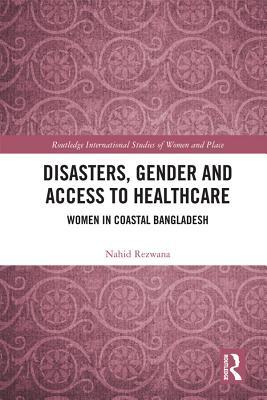
Disasters, gender and access to healthcare: women in coastal bangladesh emphasizes women’s experiences in cyclone disasters being confined with gendered identity and responsibilities in developing socio-economic conditions with minimum healthcare facilities.
A practical guide to gender-sensitive approaches for disaster management 7 gender issues in disaster management the relationships between men and women are powerful forces in every culture. The way these relationships are defined creates differences in the roles and responsibilities of men and women. It also leads to inequalities in their access to, and control over, resources (who.
In most societies, women have primary responsibility for management of household water supply, sanitation and health. Water is necessary not only for drinking, but also for food production and preparation,.
Impacts as well as long-term consequences of disasters associated with climate change.
12 feb 2018 we propose that resilience can be a pathway to produce long-term changes in gender relations and empower women in the context of disasters.
As examining the role of gender in natural disasters (30–32), gender, environmental change, and water resources (33), and gender and climate finance (34). Moreover, white papers have examined literature on specific climate change-related issues through a gender lens, such as food security (35),.
Disasters cause stress in families and communities, and this can often result in a higher level of gender-based violence. Committed to fairness we are committed to promoting a safe and inclusive environment for staff, volunteers and those affected by crisis.
In fact, in many contexts, due to socio-economic conditions as well cultural beliefs and traditional practices, women and girls are more likely to be disproportionately affected by disasters, including through loss of life during and in the aftermath of disasters, loss of livelihoods and productive assets, and increased gender-based violence.
Second, social norms and role behavior may lead to a behavior of women.
Mensions mentioned earlier: availability, access, utiliza-tion and stability. Gender aspects are relevant to most of these issues since women and men are generally affected differently by the emergency and displacement and have different access to and control over finances and resources.
Women in particular face barriers to access information and resources needed to adequately prepare, respond and cope to a disaster ─ including access to early warning and safe shelter, as well as to bank accounts to protect savings from disasters and stable income.
In a disaster, women in general may be affected differently from men because of their social status, family responsibilities or reproductive role, but they are not necessarily vulnerable. They are also resourceful and resilient in a crisis and play a crucial role in recovery.
Former crises have shown that when disasters occur, women’s access to reproductive choice is restricted, while the need for reproductive healthcare and risk of sexual and gender-based violence rises. This doesn’t just impede advancement toward gender equality, it costs lives.
Constraints that limit women's access to practical disaster management strategic plan. This paper outlines the importance of gender mainstreaming in disaster.
In emergencies, adolescent girls need tailored programming to increase their access to sexual and reproductive health services, including family planning, and to protect them from gender-based violence.
The world bank’s gender dimensions of disaster risk and resilience report reveals that women in particular face barriers to access information and resources needed to adequately prepare, respond and cope to a disaster.
Gender-based violence is widespread in times of peace and exacerbated during crises, whether due to natural disasters or conflict. Women and girls may face reduced access to health services, including sexual and reproductive health services, and an environment where perpetrators enjoy impunity.
The event and social status the gender-gap effects on life expectancy tend to be greater in more severe disasters, and in places where the socioeconomic status of women is particularly low other climate-sensitive health impacts, such as undernutrition and malaria, also show important gender differences.
Paper open access disaster, gender, and space: spatial vulnerability in post-disaster shelters to cite this article: t aryanti and a muhlis 2020 iop conf. 447 012012 view the article online for updates and enhancements.
The human impact of natural disasters is never entirely determined by nature, but is contingent on economic, cultural and social relations. In this article we address one important, yet hitherto relatively neglected aspect (who 2002), namely the gendered nature of disaster vulnerability as revealed by gender-specific disaster mortality.
Although on occasion men bear the greater negative impact of disasters, in general women and girls are far more likely to die in a disaster and die at an earlier.
1 alcohol consumption, violence, deaths related to road injuries and sexually transmitted infections may be accounted for by the intersecting gendered inequalities and gender norms that determine the health of both men and women.
Delivering gender-informed health services in emergencies visit disclaimer page provides information on providing equal access gender based care after trauma. Psychosocial issues for children and adolescents in disasters visit disclaimer page discusses the reactions of children to disasters and gives guidelines for the provision of mental.
These women may be forced to rely on the perpetrator for survival, or access to services.
Through a feminist theory framework, it will argue that the social production of gender in sri lanka contributes to an increased vulnerability to natural hazards.
Of the relationship between gender and use of primary care services. Data showing the differences between men and women) are always used in health planning. The third is to require that data released publicly are always broken down by gender.
Restricted access to the social and natural resources required for adaptation and resilience building. In some communities it is only men who hold the right to cultivate certain crops or to access markets. As a result of extreme climate events and climate-related disasters,.
Key components of disaster relief efforts, however attention to them remains inadequate and women's health suffers disproportionately as a result.
Iucn, undp and unisdr have been working jointly to integrate gender issues into disaster risk reduction across the board.
Rgc lessons from hurricane katrina 121 in an analysis of the disaster, race, gender and class are inextricably linked. This is an unfortunate chance to connect issues of race, gender.
A mix of age, income, marital status, disability status, occupation, among other factors, intersect with gender to mediate the extent and type of impact of disasters. Take the effects of disasters on mental health, for instance.
Nations international strategy for disaster reduction (2002) emphasises that the vulnerability of women to disasters is greater mainly.
There is a general lack of research on sex and gender differences in vulnerability to and impact of disasters.
However, natural disasters are not neutral: they affect women, men, girls, and boys differently due to gender inequalities caused by socioeconomic conditions,.
Hundreds of thousands of girls and women die every year because they lack access to quality health care — particularly reproductive and sexual health care. Despite increasing access to health care services and contraceptives, gender inequality continues to prevent girls and women from exercising their rights and control over their own bodies.
Thus gendered identity creates more homogeneity than difference among women in healthcare access after disasters, strongly influenced by cultural attitudes, behaviours and norms around gender within society. Prevailing disaster management plans consider 'women' without this context of gender.
Natural disasters exacerbate existing gender inequalities and pre-existing vulnerabilities. The majority of those who die in natural disasters are women.
Access your account or create a new one for additional features or to post job or training opportunities.
In many contexts gender inequalities constrain the influence and control of women and girls over decisions governing their lives as well as their access to resources such as finance, food, agricultural inputs, land and property, technologies, education, health, secure housing and employment.
Gender equality in climate change adaptation and disaster risk reduction in ensuring women and children have access to clean water.
Background there is increasing awareness of the importance of gender in natural resource management. Especially for communities dependent upon forests for their livelihoods, gender roles and relations can affect access to forest resources, income and food generating activities. As a consequence, gender mediated access to forest products may lead to different food security outcomes for women.
Actually, women are more likely to die in some disasters in some regions, but not in others.
An e-learning course to help you understand how your disaster risk management (drm) projects can equally benefit women and men by addressing: - the concept of gender, and how gender roles can affect women and men’s risk and resilience to natural hazards; - how women and men manage, respond and experience disasters differently due to gender roles and gender inequalities; - how these differences should be addressed in drm projects to ensure that women and men benefit equally from them.
Gender-based violence can occur at any point in a person’s life, in times of peace or instability. Armed conflict, natural disasters and humanitarian emergencies can significantly weaken a society’s ability to protect women and girls from gender-based violence.
Disasters often affect women, girls, men and boys differently due to gender inequalities caused by socioeconomic conditions, cultural beliefs, and traditional.
Youth experiencing gender dysphoria might have better health outcomes if they receive gender-affirming care earlier, according to a new study. The research adds to existing evidence that access to gender-affirming care has positive mental health impacts for transgender or gender-expansive youth experiencing dysphoria.
All crises—natural disasters, wars, pandemics—affect different sections of people in different ways. Like any other crisis, covid-19 has differing impacts on society. It has affected men and women, rich and poor, and adults and children differently.
Gender-based inequalities in access to land, credit, information, markets and other productive resources put women on the there are signs that natural disasters.
A study of gender-disaggregated data from disasters between 1981 and 2002 in 141 countries concluded that death rates between women and men were less differentiated where economic and social rights were more equally distributed.
Emergency response teams: assessment and response teams should include equal numbers of male and female members in order to facilitate accessing women.
This paper highlights the gaps in terms of disaster preparedness by adopting cbdrm; and also critically analyzes.
Reports from major conferences on gender and disaster management or reduction since 2002, organization of two consultative meetings with experts in 2007 and 2008; introduction of the issue to national governments at the first global platform for disaster risk reduction in 2007, and further and wider discussion of gender and disaster risk.
They reported wearing the still damp cloths, as they did not have a place to dry them. Gender roles women’s vulnerability to the impact of disasters is also increased by socially determined dif-ferences in roles and responsibilities of women and men and inequalities between them in access to resources.
The living conditions of women are also affected differently to those of men in disaster and postdisaster situations.
Goal: by 2030, substantially decrease the direct economic losses relative to global gross domestic product caused by disasters, including water-related disasters, with a focus on protecting the poor and people in vulnerable situations. More research: further data and research on this topic can be found at the our world in data on natural disasters.
And gender and vulnerability aspects in disaster risk reduction. The publications more at risk than men and how the have less access to aid and rehabilitation.
Abstract purpose: this article contributes new empirical evidence and nuanced analysis on the gender difference in access to extension services and how this translates to observed differences in technology adoption and agricultural productivity. Approach: it looks at the case of ethiopia, where substantial investments in the extension system have been made, but the coverage and effect of these.
Hence, an effective gender-sensitive drr strategy should both help take better into account women’s vulnerabilities in specific cultures without forgetting to highlight women’s potential and capabilities in order to prepare, confront, and recover from disasters.
More than one-third of the world’s poor live in multi-hazard zones, and low-income countries account for more than 70 percent of the world’s disaster “hotspots. ” mainstreaming disaster risk management into development planning can help lower the impact of disasters on property and lives.
Underlying risk factors, such as gender inequality, cause women and men to be affected differently by disasters and climate change. Discrimination, unequal access to opportunities and resources, and socially constructed differences can impact the ability of women and girls to effectively prevent, prepare, survive and recover from disasters.
Other objectives are to address the gender bias in disaster-related research, the critical analysis of established roles of women, the attention needed by operational agencies to the special needs of women together with dependent children, and the integration of the report findings with disaster-related research in general.
This reveals how both gender and family relationships can shape disaster recovery and everyday experiences of poverty. Overall, this project contributes to the study of race/class/gender inequality, social policy, housing, and disaster recovery.
Women bear a disproportionate brunt of health crises, environmental disasters and gender-based violence. Unfortunately, the covid-19 global pandemic could follow this pattern-having devastating implications for women's access to justice. What are courts and governments doing to address these challenges?.
This session explores some of the factors that are important when dealing with land rights for women, including international standards, the need for targeting and the importance of data.
Natural disasters, armed conflict, and political unrest increase women’s and girls’ vulnerability. Crisis makes it harder to access maternal health services even as the need for them becomes more urgent. In these settings, care works with local partners and governments to deliver life-saving interventions.
Societies (ifrc) and national societies provides dignity, access, participa-tion and safety for all people affected by disasters and crises. It provides practical guidance on how to mainstream these four principles in all sectors, based on a consideration of gender, age, disability and other diversity factors.
Disasters are known to have direct and indirect impacts on gender-based violence particularly against women and girls, revealing a pattern of heightened violence and vulnerability in their aftermath. These gendered impacts are directly relevant to social work theory, practice and advocacy, which seek to promote social wellbeing and to prevent.
Second, from mitigation to reconstruction, disaster projects must be gender- sensitive and equitable in their effects.
Gender-based inequalities and intersectional forms of discrimination. Women and girls have higher levels of mortality and morbidity in situations of disaster. 7 gender-based economic inequalities mean that women, and female-headed households in particular, are at a higher risk of poverty and more likely to live in inadequate.
Yet relative to men, they have less access to productive assets such as land and services such as finance and extension. A variety of constraints impinge upon their ability to participate in collective action as members of agricultural cooperative or water user associations.
Higher vulnerability of women to disasters include lack of means and assets to ensure their own safety in situations of flooding, landslides and storms.
Disasters, gender and access to healthcare: women in coastal bangladesh emphasizes women's experiences in cyclone disasters being.
Book description disasters, gender and access to healthcare: women in coastal bangladesh emphasizes women’s experiences in cyclone disasters being confined with gendered identity and responsibilities in developing socio-economic conditions with minimum healthcare facilities.
The publication provides information on gender perspectives on risk reduction and recovery, the participation of women's organizations in disaster recovery efforts, measures taken to address gender-based issues in recovery, plans and programs developed with gender sensitivities, and post-disaster needs assessment methodologies.
For this guide, discussion is not restricted to access to land alone, but also includes access to other natural resources, such as water and trees, which may be essential for people’s livelihoods. For convenience, “access to land” is used here to include access to other natural resources as well.
Post Your Comments: