Read online Beyond Benefit Cost Analysis: Accounting for Non-Market Values in Planning Evaluation - Domenico Patassini file in PDF
Related searches:
Rationale for Cost-Benefit Analysis Bizfluent
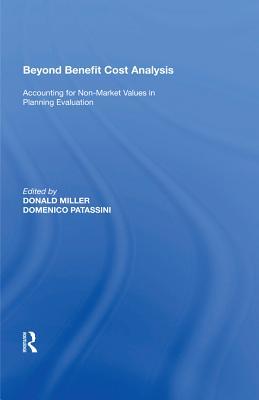
Beyond Benefit Cost Analysis: Accounting for Non-Market Values in Planning Evaluation
Amazon.com: Beyond Benefit Cost Analysis: Accounting For Non
Society for Benefit-Cost Analysis: Home
A Benefit-Cost Analysis Model for Social Service Agencies - ICI
Beyond cost-effectiveness: Using systems analysis for
Home - Society for Benefit-Cost Analysis
Beyond cost-benefit analysis; the search for a comprehensive
Economic approaches for assessing climate change adaptation
Cost/Benefit Analysis Project - Center for the Economics of Human
Cost Benefit Analysis for Projects – A Step-by-Step Guide
Benefit-Cost Analysis Guidance for TIGER and INFRA Applications
A Cost Benefit Analysis For Addiction? by Michael Patanella
Cost Benefit Analysis Process for Rulemaking Federal
10 considerations for BYOD cost/benefit analysis - TechRepublic
Cost-Benefit Analysis for Business Cases (Definition, Steps
A prerequisite for cost-benefit analysis, it is not justifiable to devote major resources to the gen- for satisfaction may go beyond the act's imme- diate consequences.
Beyond benefit cost analysis: accounting for non-market values in planning evaluation (urban planning and environment) by donald miller (editor), domenico patassini (editor) isbn-13: 978-0754640943.
Future flows of benefits and costs are discounted to reflect the time value of that additional benefits to the value of $40 million will accrue to a project beyond.
Ivy league colleges are all the top tier colleges that ensure a promising academic career with an abundance of career opportunities at the students’ doorstep as soon as they graduate.
Includes cost effectiveness analysis, which is considered here a subset of cost-benefit analysis. 3 ifc and miga are not included in this analysis, although illustrations will highlight aspects of eco-.
Cost benefit analysis (cba) is a systematic method for quantifying and then comparing the total costs to total expected rewards of undertaking a project or making an investment.
Determining the potential savings of a byod program requires a careful cost/benefit analysis.
Beyond benefit-cost analysis: the economics of solving water resource problems remedies to water resource problems like groundwater depletion and water pollution often have high benefit-to-cost ratios but are regularly late and incomplete.
The benefits of avoided climate change: cost-benefit analysis and beyond an important tool used in making such policy choices is cost-benefit analysis.
Well-being and fair distribution: beyond cost-benefit analysis.
Economic approaches for assessing climate change adaptation options under uncertainty.
In some models, the opportunity cost is also an important part of the cost-benefit analysis because these costs are considered alternative benefits and factoring them enables to weigh the advantages from an alternative course of action and not just the current path that the company is thinking of adopting.
There is increasing interest in estimating the broader benefits of public health interventions beyond those captured in traditional cost-utility analyses. Cost-benefit analysis (cba) in principle offers a way to capture such benefits, but a wide variety of methods have been used to monetise benefits in cbas.
2)move beyond viewing benefit-cost analysis as a simple ratio of benefits to costs; 3)include both monetized and non-monetized benefits in the analysis; and 4)consider what is a benefit and what is a cost, and to whom.
Neither cost-effectiveness nor cost-benefit analysis can capture important aspects of problems such as ebola or the emerging threat of zika, especially issues of inequality and disparity-issues that dominate the planning of many global health and economic organizations.
The cost-benefit analysis removes any emotional element and helps to overcome biases; it takes into account a broad spectrum of benefits and costs and converts them into currency to simplify matters; suitable for all projects small or large; the cost-benefit analysis helps to make a rational decision by looking at the figures expressed in the same units.
The actual applicable bca process includes: listing all options and stakeholders. Calculating and evaluating all costs/benefits over the projected time period. Estimate the net present value (time value of money) of all options.
The benefit-cost analysis considers adoption in three cases—a base case, a behavior modification case, and a high infrastructure case—across three regions in the state, including the new york metropolitan area, long island, and upstate new york.
A cost-benefits analysis looks at the pluses and minuses of taking a course of action. Different versions of the analysis can make decisions easier no matter the size or context. Measuring costs against benefits serves well when introducing.
You can do a cost-benefit analysis to determine what benefits you’d gain from introducing new software to the market, how many people to hire, and how much money will be needed to pay the new hires and to estimate if the return on this investment will outweigh the costs.
Beyond benefit cost analysis: accounting for non-market values in planning evaluation: author: domenico patassini: publisher: routledge, 2017: isbn: 1351162667, 9781351162661: length: 340 pages:.
A true cost-benefit analysis requires a solid grounding in economic theory and techniques, which is beyond the training of many evaluators. It may be necessary to hire a consultant if this type of analysis is desired. Critics feel that many cost analyses are overly simplistic, and suffer from serious conceptual and methodological inadequacies.
Concentrating on circumstances that may render a standard cost benefit analysis (cba) inappropriate. It is designed to make infrastructure investors and planners think deeply about their assumptions and, in some circumstances, to broaden the range of issues that are taken into account.
Benefit-cost analysis is a type of economic evaluation method where the costs of the program or intervention are compared to the benefits of the intervention, and both costs and benefits use the same units: dollars. Benefit-cost analysis allows you to consider all costs and benefits over time, even those beyond the length of the intervention.
The conventional benefit–cost approach to understanding the climate problem has serious limitations. Fortunately, an alternative way of thinking about the problem has arisen in recent decades, based on analyzing the cost effectiveness of achieving a normatively defined warming target.
Cost-benefit analysis has long been extolled as the best method for stripping regulatory decisions of bias and anchoring them with objective, real-world economic.
View the table of contents for this issue, or go to the journal homepage for more.
It can uncover hidden costs and benefits: cost-benefit analysis forces you to sit down and outline every potential cost and benefit associated with a project, which can help you uncover less-than-obvious factors, such as indirect or intangible costs. It’s difficult to predict all variables: while cost-benefit analysis can help you outline the projected costs and benefits associated with a business decision, it’s challenging to predict all the factors.
Many components of a project retain some residual useful life beyond the benefit-cost analysis period (typically 20 years). At the end of the analysis period, the infrastructure that has been put in place generally has not been completely worn out, and will continue to provide benefits to drivers and travelers into the future.
Neither cost-effectiveness nor cost-benefit analysis can capture important aspects of problems such as ebola or the emerging threat of zika, especially issues of inequality and disparity—issues that dominate the planning of many global health and economic organizations.
A cost benefit analysis of total budget estimates and annual reduction estimates of nitrogen, phosphorus, and total suspended solids was used to determine which of the six projects provides the lowest cost per unit of pollutant removal. The little westham creek stream restoration project yielded the lowest cost per unit of pollutant removal.
View and download training materials for the 2019 version of the introduction to benefit-cost analysis course (e/l 0276). Included are the student guide, instructor guide, visuals and exam.
6 jul 2010 global: look beyond cost-benefit analysis in adaptation new paper calling on countries not to restrict themselves to cost-benefit analysis.
5 sep 2018 there is increasing interest in estimating the broader benefits of public health interventions beyond those captured in traditional cost-utility.
With the introduction of newer, more expensive psychotropic medications, healthcare providers and managed care administrators must consider whether these.
A cost benefit analysis is an effective way to weigh the costs and benefits of a proposed project or action. However, the cost benefit analysis can be inaccurate due to a number of errors made by the common evaluator. By identifying these common cost errors in a cost benefit analysis (cba) and understanding their impact on the results, one can easily learn how to avoid making them.
Determining the costs of launching a start-up begins with knowing the factors on which to base your estimates. Use these guidelines to help you figure out your business start-up costs.
Employers in long-term care are highly constrained in what they pay their workers, face government training requirements even if they do not offer apprenticeships, and often pay low-wage rates even to highly qualified workers.
Cost-benefit analysis acter who spoke prose without knowing it, economists who advocate use of cost-benefit analysis for public decisions are philosophers without knowing it: the answer given by cost- benefit analysis, that actions should be under- taken so as to maximize net benefits, represents.
Cost benefit analysis is an analytical framework used to assess the benefits and costs of policy proposals incremental benefit cost ratio analysis is made when mutually exclusive alternatives exist and each additional increase in investment should be justified based on the additional benefits, additional costs.
Many businesses use cost-benefit analysis to help them prioritize the projects with the best and highest financial returns. But despite its usefulness, there are disadvantages of cost-benefit analysis.
Incorporating induced travel into a benefit-cost analysis can be difficult and requires additional calculations beyond the standard benefits and costs.
Well-being and fair distribution: beyond cost-benefit analysis in the introduction to this excellent book, matthew adler states that it aims to provide a comprehensive, philosophically grounded, defense of the use of social welfare functions as a framework for evaluating governmental policies and other large-scale choices.
Love it or hate it, public transportation is a major part of the infrastructure of larger cities, and it offers many benefits to those who ride (and even those who don't). Take a look at some of the reasons why you may want to consider usin.
The conventional benefit-cost approach to understanding the climate problem has serious limitations. Fortunately, an alternative way of thinking about the problem has arisen in recent decades, based on analyzing the cost effectiveness of achieving a normatively defined warming target. This approach yields important insights, showing that delaying action is costly, required emissions reductions.
Cost-benefit analysis is a process intended to determine whether the total expected benefits that will be produced as a result of implementing change outweigh the total expected cost involved. Both the benefits and the costs are usually expressed in terms of financial values, and values may be adjusted to reflect the period of time over which.
Adler, well-being and fair distribution: beyond cost-benefit analysis, oxford university press, 2012, 656pp.
A cost-benefit analysis allows businesses to assess business operations solely on numbers, freeing sway from personal bias. A cost-benefit analysis reduces ample information into a simple cost or benefit category, creating a less complex decision-making environment.
Cost-benefit analysis has become the dominant methodology for assessing governmental policy. It has given rise to a vast academic literature, and is now officially required as part of the policymaking process in a number of governments. It lacks firm normative foundations and is biased toward the rich.
A cost benefit analysis weighs the pros and cons, or benefits and costs, of a project or decision in order to determine its feasibility or to compare alternatives. This can be especially helpful for weighing decisions that have calculable financial risks and rewards, or when you need a quick way to evaluate a new initiative.
Critics of cost–benefit analysis argue that reducing all benefits to monetary terms is impossible, and that a quantitative, economic standard is inappropriate to political decision making.
Advertisements: the following points will highlight the nine things to know about cost-benefit analysis. Subject-matter: the most popular method of project evaluation is to consider the cost benefit analysis of different projects and then to select involving lesser cost and yielding greater benefit.
Move beyond viewing benefit-cost analysis as a simple ratio of benefits to costs.
As i argue in a new book, well-being and fair distribution: beyond cost-benefit analysis, the “social welfare function” (swf) provides a very plausible answer to these questions. The swf framework is a systematic, normatively appealing methodology for incorporating distributional considerations into policy analysis.
16 feb 2021 major advances have been made in trying to go beyond the conventional cost- benefit analysis appraisal of major transport projects that focus.
A benefit-cost ratio (bcr) is a ratio used in a cost-benefit analysis to summarize the overall relationship between the relative costs and benefits of a proposed project.
The discipline of cost-benefit analysis amartya sen* abstract cost-benefit analysis is a general discipline, based on the use of some founda-tional principles, which are not altogether controversial, but have nevertheless con-sidered plausibility. Divisiveness increases as various additional requirements are imposed.
First, a cost/benefit analysis is an analysis of the costs or expenses incurred by a project in comparison to the benefits derived from implementing the project. Its preparation begins with an estimate for an overall project (an order-of-magnitude estimate), as described in pride special subject bulletin #17 (taking the mystery out of estimating)�.
A cost-benefit analysis is an economic evaluation of investment alternatives and project options with respect to their profitability and liquidity effects. It can also consider non-financial and qualitative aspects which however may or may not be reflected in the forecast of cost and benefits.
2 “enefit-cost analysis” and “cost-benefit analysis” are interchangeable names for the same process of comparing a project’s benefits to its costs. Department of transportation uses “benefit-cost analysis” to ensure consistent terminology and because one widely used method for ranking projects is the benefit-cost ratio.
Benefit-cost analysis (sometimes referred as cost-benefit analysis) is a well-established and widely-used approach for collecting, organizing, and analyzing information on policy impacts. If well conducted, it provides an objective, unbiased assessment of the positive and negative effects of alternative policies.
Moving beyond benefit-cost analysis of climate change posted on december 2, 2013 by gil friend in uncategorized with no comments my friend jonathan koomey ‘s invited perspective article, “moving beyond benefit-cost analysis of climate change”, was just posted by the open access on-line journal environmental research letters�.
The cost benefit analysis states that if the benefit arrived from the pollution elimination programme is greater than the benefit received from it, it is called ‘positive benefit’. On the other hand if the cost incurred in that programme is greater that the benefit received from it, it is termed as ‘negative benefit’.
Cost allocation: cost allocation is a simpler concept than either cost-benefit analysis or cost-effectiveness analysis. At the program or agency level, it basically means setting up budgeting and accounting systems in a way that allows program managers to determine a unit cost or cost per unit of service�.
Since a societal perspective is taken in cba for bank funded projects, the benefits should include all societal benefits.
According to the economist, cba has been around for a long time. But the concept of cba as we know it dates to jules dupuit, a french engineer, who outlined the process in an article in 1848.
Summarizes the benefit-cost analysis (bca) findings from the entire series of disease control priorities, third edition (dcp3), and then examines (1) the existing.
Week 5 discusses the importance of extending economics beyond the farm gate, characteristics of agri-environmental projects, benefit: cost analysis, and provides an example with gippsland lakes.
Beyond cost-benefit analysis in the governance of synthetic biology.
Com: beyond benefit cost analysis: accounting for non-market values in planning evaluation (urban planning and environment) (9780754640943): miller, donald, patassini, domenico: books.
Specify the structured comparisons the first step of a benefit-cost analysis specifies the program being evaluated and the alternative (counterfactual) with which it will be compared. This first step defines the scope and ultimately the results of the benefit-cost analysis.
The most obvious answer is that you should use cost benefit analysis when contemplating a specific business decision, or when comparing multiple business decisions. Aside from this, cost benefit analysis can also be used to evaluate past decisions.
Office of the assistant secretary for planning and evaluation office of the assistant secretary for planning and evaluation.
If the net present value is positive for the calculation (meaning the benefits outweigh the costs), the action or decision will generally be a good investment.
Well-being and fair distribution: beyond cost-benefit analysis. This book addresses a range of relevant theoretical issues, including.
A cost benefit analysis is performed to identify the key effects—both positive and negative—of various alternatives for a rule. Cost benefit analysis informs the agency and the public whether the benefits of a rule are likely to justify the costs, or determines which of various possible alternatives would be the most cost effective.
What is cost benefit analysis? also referred to as ‘benefit cost analysis’, cost benefit analysis is a systematic process by which business decisions are analyzed. The benefits of a given situation or business-related action are summed, and then the costs associated with taking that action are subtracted.
What's it going to cost you to take a certain action, to leave? is there a common value for you? if they have children, is there some benefit to trying to work through this for the family unit's sake? trying to get them to visualize and talk about benefits as far as the history.
Post Your Comments: