Read Extractive Economies and Conflicts in the Global South: Multi-Regional Perspectives on Rentier Politics - Kenneth Omeje | PDF
Related searches:
Extractive Economies and Conflicts in the Global South - Routledge
Extractive Economies and Conflicts in the Global South: Multi-Regional Perspectives on Rentier Politics
Extractive Economies and Conflicts in the Global South - CiteSeerX
Extractive Economies and Conflicts in the Global South Taylor
Extractive economies and conflicts in the global south: Multi-regional
Extractive Economies and Conflicts in the Global South: Re
Extractive Industries and Conflict - the United Nations
Extractive Economies and Conflicts in the Global - Google Libri
Extractive Economies and Conflicts in the Global - Google Books
Extractive Economies and Conflicts in the Global South eBook
Extractive economies and conflicts in the global South
EXTRACTIVE ECONOMIES AND CONFLICTS IN THE GLOBAL SOUTH
Extractive Economies and Conflicts in the Global South - SILO.PUB
Extractive Economies, Growth, and the Poor - Colorado School of
CSR and social conflict in the Brazilian extractive sector
Conflict and Coexistence in the Extractive Industries - Chatham House
CiteSeerX — Extractive Economies and Conflicts in the Global
Extractive Hegemony in the Arctic: Energy Resources and Political
The price of oil? Extractive development and conflict risk in
Extractive Sectors and the Poor - Oxfam America
Reseña: Extractive economies and conflicts in the global
The extractive industries, mineral sector reform and post
Tourism, the extractive industry and social conflict in Peru
The Political Economy of Conflict and Violence against Women
Extractive Conflicts in the Developing World JIA SIPA
Extractive resources and fragile states UNEP - UN Environment
Mapping violent conflicts in the Mexican extractive industry
Extractive Industries and Conflict - Disasters & conflicts UNEP - UN
Social Conflict, Economic Development and Extractive Industry
Spotlight on Publications: Extractive Industries and Conflict
Explainer: what is the extractive economy? by Stephen
Pathways and Drivers Conflict and Extractives Extractives Hub
Bebbington - Extractive industries and stunted states 2
The Role of the Extractive Sector in Expanding Economic Opportunity
(PDF) Extractive Resources, Conflicts and Migration
Uncommon ground: The impact of natural resource corruption on
How the extractive industries threaten our food systems
The Extractive Industry's Impact on Economic Growth in SADC
Promoting Human Rights, Ensuring Social Inclusion and Avoiding
[PDF] Costs of Company-Community Conflict in the Extractive
Iron ore peripheries in the extractive boom: A comparison
Transnational Corporations in the Extractive Industries
Evidence synthesis of the impact of extractive industries on
Extractive industries, socio-environmental conflicts and
Spotlight on Organisations: Extractive Industries and
TOOLKIT AND GUIDANCE FOR PREVENTING AND MANAGING LAND AND
(PDF) The politics of extractive governance: Indigenous
Extractive industries, socio- environmental conflicts and
EXTRACTIVE INDUSTRIES AND ENVIRONMENTAL REGULATION IN POST
INDIGENOUS PEOPLE, CONFLICT AND EXTRACTIVE conflict over
Might the Keys to Peace Open the Doors to Extractivism
Inequality, extractive institutions, and growth in
Aug 7, 2020 with the economic interests of extractive companies and governments.
The interplay between extractives development and political dynamics can exacerbate conflict where there is a risk that development is leveraged to further political and personal agendas, such as enriching individuals or embedding political actors. Communities can become particularly vulnerable to being co-opted for political and/or corrupt ends.
Contextualization and historicity this book primarily explores the anatomy of rentier politics in extractive economies and how the phenomenon relates to conflict processes - conflict formation.
Conflicts between indigenous peoples, corporations and governments are occurring around the world. Because many of the extractivist practices take place where indigenous communities are located, the conflicts are making these landscapes politicized and contested.
These countries' slower rates of export growth, and hence slower overall economic growth, due to armed conflict and rent seeking that distracts the government.
That the extractive industries in the sadc countries have on their economic by the government or by a hierarchical elite; fifth, tendency for armed conflicts that.
Outlets for goods and services, enhance social license to operate, and mitigate risk and potential conflict.
It concludes by discussing the long-term impact of mobilizing strategies on extractive conflicts. At the onset of the 20th century, the high demand of oil and minerals from emerging economies led to an increase in commodity prices in the developing word.
The economic significance of the sector to producer countries is well known, as is its role in influencing the fate of political leaders.
As the extractive economy has entered another boom period over the last decade, not least in latin america, the countries in which this boom is occurring are challenged to interpret this ambiguity. Will the extractive industry yield, for them, economic development, or will its main gifts be ones of conflict, degradation and unequal forms of growth.
The majority of developing countries in the global south are evidently rich in natural resources, but paradoxically blighted by excruciating poverty and conflicts. This paradox of deprivation and war in the midst of plenteous resources has been the subject of great debate in international political economy in contemporary history.
Extractive industries, socio- environmental conflicts and political economic transformations in andean america� doi link for extractive industries, socio- environmental conflicts and political economic transformations in andean america. Extractive industries, socio- environmental conflicts and political economic transformations in andean.
Extractivism is the process of extracting natural resources from the earth to sell on the world market. It exists in an economy that depends primarily on the extraction or removal of natural resources that are considered valuable for exportation worldwide.
Request pdf extractive economies and conflicts in the global south: re- engaging rentier theory and politics contextualization and historicity this book.
In particular, there are three policy packages – granting cultural, territorial and consultation rights respectively - that have successively strengthened recognition of indigenous rights in latin america, thereby reducing social conflict over extractive activities.
Oct 15, 2017 the majority of developing countries in the global south are evidently rich in natural resources, but paradoxically blighted by excruciating.
Extractive economies and conflicts in the global south: re-engaging rentier theory and politics, kenneth omeje-- rentier politics, extractive economies and conflict in the global south: emerging ramifications and theoretical exploration, usman a, tar-- anatomy of an oil insurgency: violence and militants in the niger delta, nigeria, michael.
9 challenging economic models that base develop- rates of corruption, repression, and conflict.
In other cases its main heritages have been social conflict, environmental damage and underperforming national economies. As the extractive economy has entered another boom period over the last decade, not least in latin america, the countries in which this boom is occurring are challenged to interpret this ambiguity.
Contents: extractive economies and conflicts in the global south: re-engaging rentier theory and politics, kenneth omeje; rentier politics,.
To summarise, the debates in peru tend to explain social conflicts around extractive industries as a problem of political system, inadequate distribution and inadequate transparency and management of conflicts, all of what is seen as an institutional problem or a problem of ‘governance’.
Mar 2013 rentier politics extractive economies and conflict in the global.
Accompanied by changes in public policy, a proliferation of social conflicts, shifts in use to postpone other needed reforms; consequently extractive economies.
This document highlights some of the key organisations that focus on extractive industries and conflict management in the latin american context. Together these organisations cover a wide range of themes, such as arbitration, right to prior consultation, indigenous peoples and human rights, private sector human rights performance, and social and environmental conflicts.
Another dimension of conflict amongst extractive economies is the conflict associated with the consequences of natural resource extraction for human livelihood,.
Multi-regional perspectives on rentier politics kenneth omeje the majority of developing countries in the global south are evidently rich in natural resources, but paradoxically blighted by excruciating poverty and conflicts.
In order to sell goods produced from extractive practices at prices affordable to workers, there is more pressure to extract, even more cheaply, from land and from the earth.
Extractive economies and conflicts in the global south: multi-regional oil, diamonds, gold and timber, to name but a few, characterize the economic geography.
Economic and social inequality, and insecure water rights and land tenure. Reliable statistics on community conflicts and their impact are generally unavailable, but incidental evidence suggests that the number of such conflicts is increasing in many parts of the world.
Conflict and coexistence in the extractive industries this paper shows that the level of conflict between extractive companies and governments, and the number of cases going to international arbitration, have rocketed in the last 10 years.
This study investigates the effect of income inequality on economic growth in nondemocratic regimes. We provide a model in which a self-interested ruler chooses an institution that constrains his or her policy choice. The ruler must care about the extent of citizens’ support in order to remain in power. Under an extractive institution, the ruler can extract a large share of citizens.
Extractive industries and conflict the extractive industries (eis) present particular challenges for both fragile states and developing nations; the exploitation of non-renewable natural resources, including oil, gas, minerals and timber has often been cited as a key factor in triggering, escalating or sustaining violent conflicts around the globe.
Extractive economies and conflicts in the global south: multi-regional perspectives on rentier politics, kenneth omeje.
Why nations fail: the origins of power, prosperity, and poverty, first published in 2012, is a book by american economists daron acemoglu and james robinson. It summarizes and popularizes previous research by authors and many other scientists.
In light of such dependencies, the task of achieving sustainable extractive-led development in post-conflict states remains an on-going challenge, as resource dependency exposes fragile economies to ‘boom-and-bust’ commodity cycles.
The economic significance of the extractives sector is well recognised – it between human rights, social inclusion and avoiding conflict in the extractive sector.
Jan 15, 2019 case studies and quantitative research support the observation that mineral wealth leads to conflict.
Peru has seen high levels of investment, and in 2017 registered 130 ‘socioenvironmental’ conflicts, with 101 (78%) of these related to mining and hydrocarbon extraction (defensoría del pueblo 2017). This tumult caused by extractive industries’ arrival is a problem for both the regions affected and extractive companies.
Jan 22, 2021 colonialism and the political economy of extraction reviewing, monitoring, and managing conflicts of interest; stopping the revolving door.
The boom in mining and extractive industries continues to penetrate into the farthest reaches arguing that it is in the “national interest “ and “contributes to economic growth”, with little conflicts being suffered by communities.
Extractive activities can also fuel conflicts and threaten human rights if certain safeguards are not met or if they are poorly managed. By bringing together the key players and encouraging sustainable practices, un environment works to reduce these threats, boost economies and support livelihoods.
Sep 7, 2018 growth in extractive operations, and; the political economy of harmful extractive economies and conflicts in the global south: multi-regional.
Extractive industries successfully in recent decades, diversifying their economies, managing governance deficits and conflicts, and investing in human development and infrastructure for the betterment of the people and the nation at large. As kenya undergoes political, economic and social transition underpinned by a progressive constitution,.
Un-eu guidance note: conflict prevention in resource rich economies (undp and eu-un partnership on land, natural resources and conflict).
The research also shows that while environmental impacts such as pollution often trigger conflict, there are typically underlying economic and social issues that relate to the quality of the relationship between the company and local communities, which if left unaddressed, may make conflict more likely.
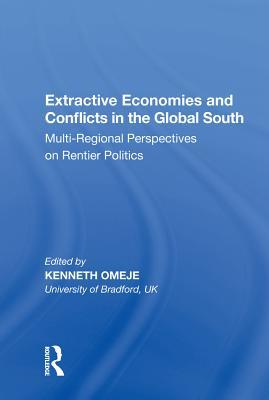
This book contributes to the debate by examining the underlying structures, actors and contexts of rentier politics and how they often produce and aggravate conflicts in the various extractive economies and regions of the global south.
Mining companies in peru, facing local opposition to their activities on account of the environmental damage they are causing, have turned to tourism to clean up their image.
Feb 14, 2019 social conflict and csr in the extractive industries. Ei companies are criticised for adverse social, environmental, political and economic.
Extractive economies and conflicts in the global south: re-engaging rentier theory and politics, kenneth omeje-- rentier politics, extractive economies and conflict in the global south: emerging ramifications and theoretical exploration, usman a, tar-- anatomy of an oil insurgency: violence and militants in the niger delta.
In this paper we analyse iron ore mining conflicts exploring the links between conflicts dynamics and different development patterns of india and brazil. By providing both quantitative and qualitative data on the selected cases, the study contributes towards addressing core-periphery dynamics as a key aspect of environmental (in)justice.
Violent conflict is most likely to occur where local communities have been systematically excluded from decision-making processes, when the economic benefits.
Extractive economies and conflicts in the global south: multi-regional edited by dr kenneth omeje.
May 12, 2013 social conflict, economic development and extractive industry: evidence from south america.
Conflict-sensitive business practice: guidance for extractive industries. By on may 18, 2005 how green is india's stimulus for economic recovery? is india's.
Extractive economies and conflicts in the global south: multi-regional perspectives on rentier politics.
States with violent conflictive issues in two or more sectors are: chiapas (hydroelectric and oilfields), oaxaca (mining and hydroelectric), puebla (mining, hydroelectric and oilfields), sonora.
Political economies of extraction 1 1 extractive industries, socio-environmental conflicts and political economic transformations in andean america 3 anthony bebb1ngton 2 the political economy of managing extractives in bolivia, ecuador and peru 27 jose carlos or1huela and rosemary thorp 3 the politics of extractive industries in the central.
Abstract this book primarily explores the anatomy of rentier politics in extractive economies and how the phenomenon relates to conflict processes – conflict formation, aggravation, prosecution, and escalation, as well as opportunities for resolution or transformation – in the global south.
Post Your Comments: